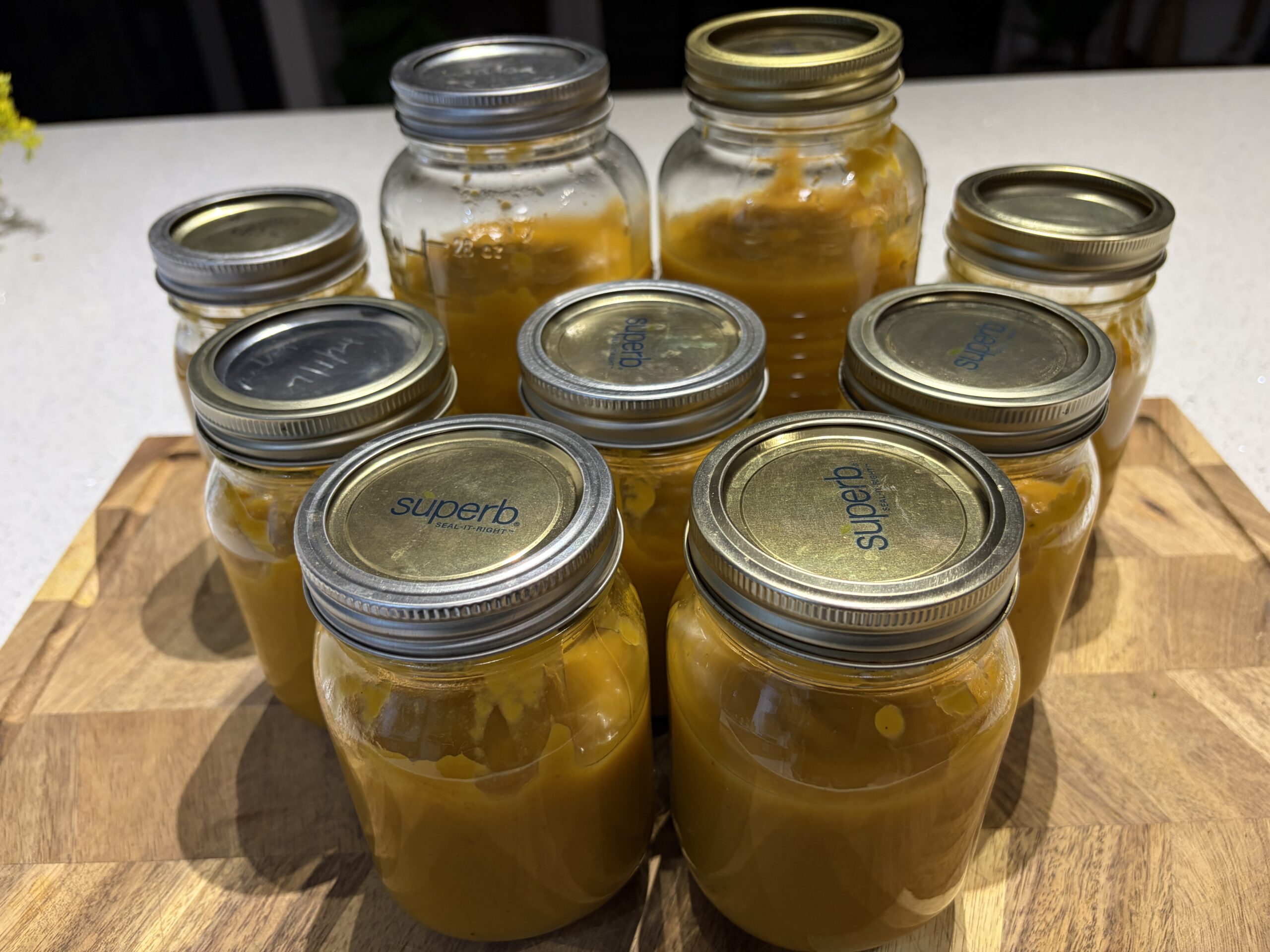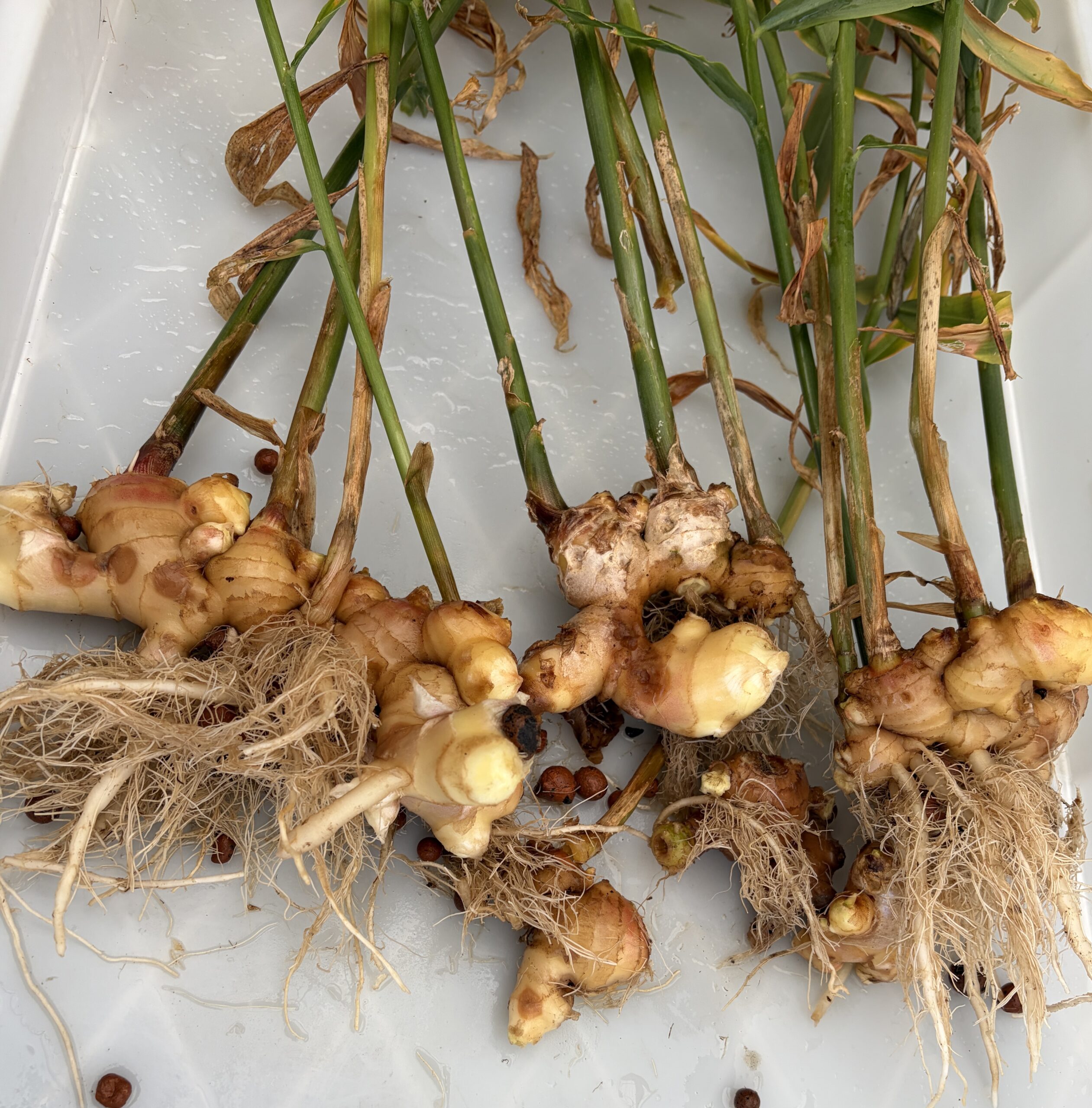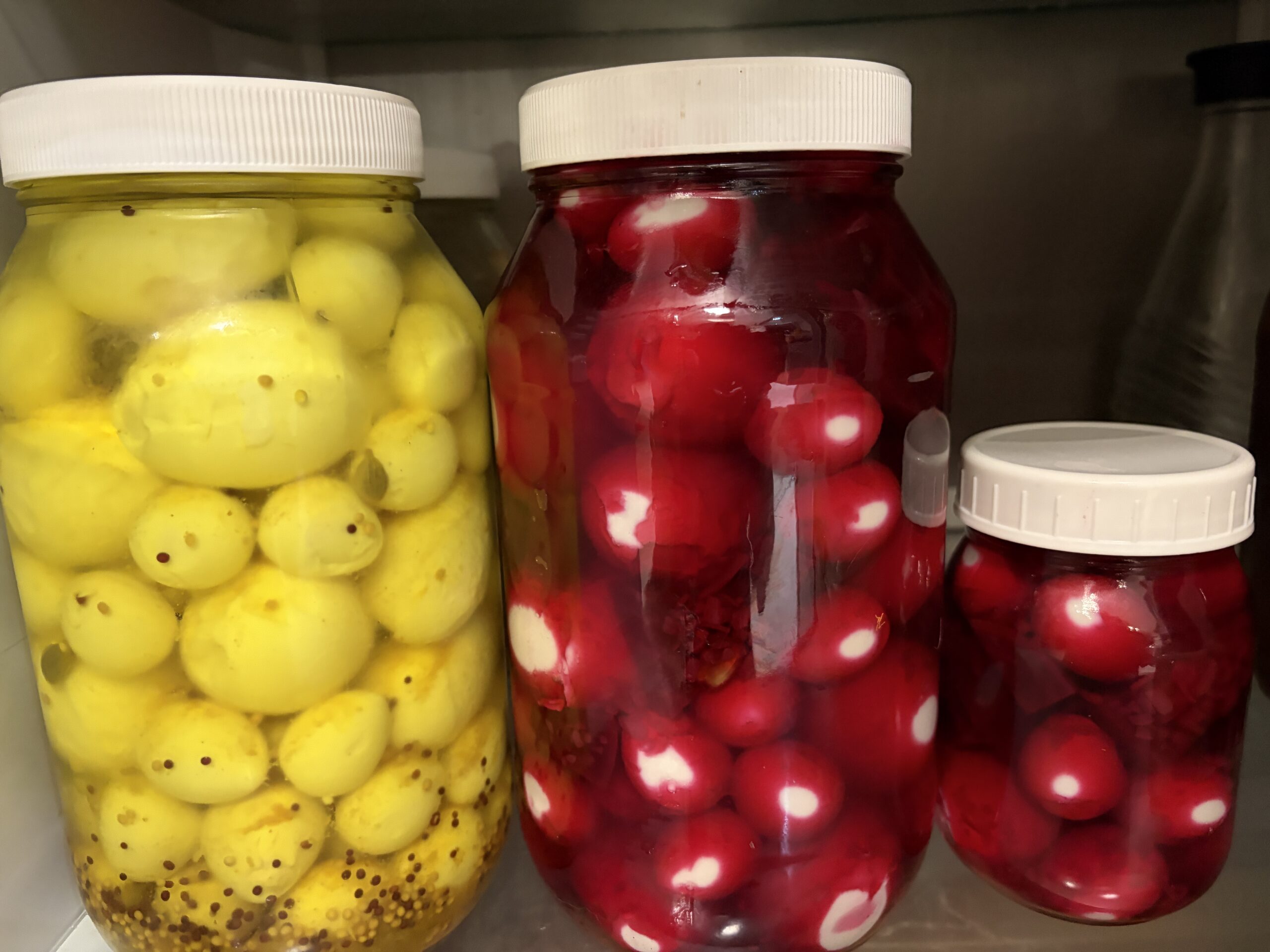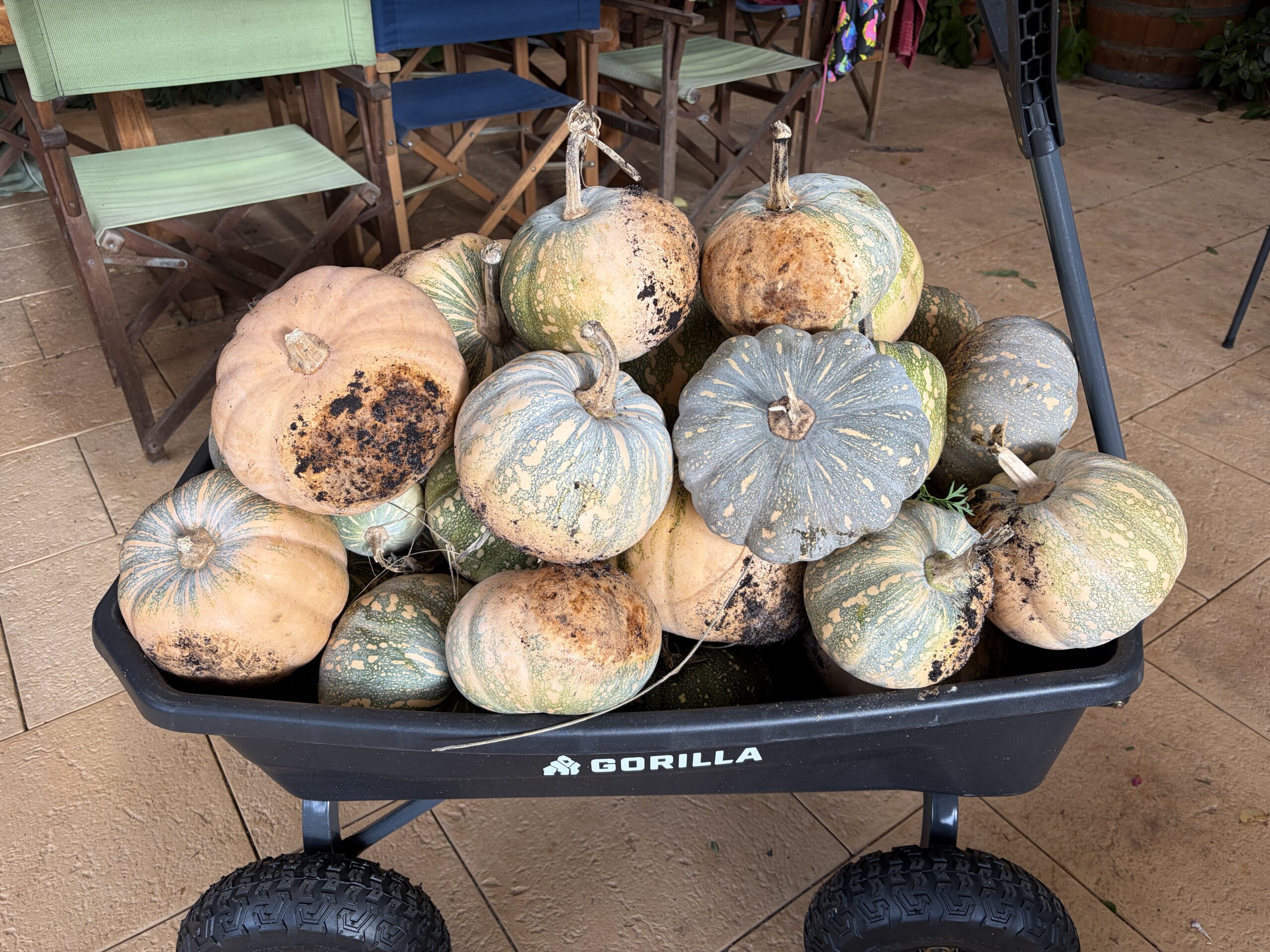
This year, we lost control of the ‘pumpkin palace’! Lots of veggies were planted as usual, and we did get a good harvest of corn and tomatoes, but the pumpkin vines took over (along with many self sown). It got to the stage we couldn’t get in there so we left it alone to do its thing.
There has been the odd pumpkin that we have been able to harvest as the vines grew out to the ‘pumpkin palace’ and into the firebreak or chook run, but now the vines have died off enough to get in there and harvest those that were ready. Well, there are quite a few, and still more to come!
Now to cure them on their sides in a dry spot ready for long term storage and preserving!
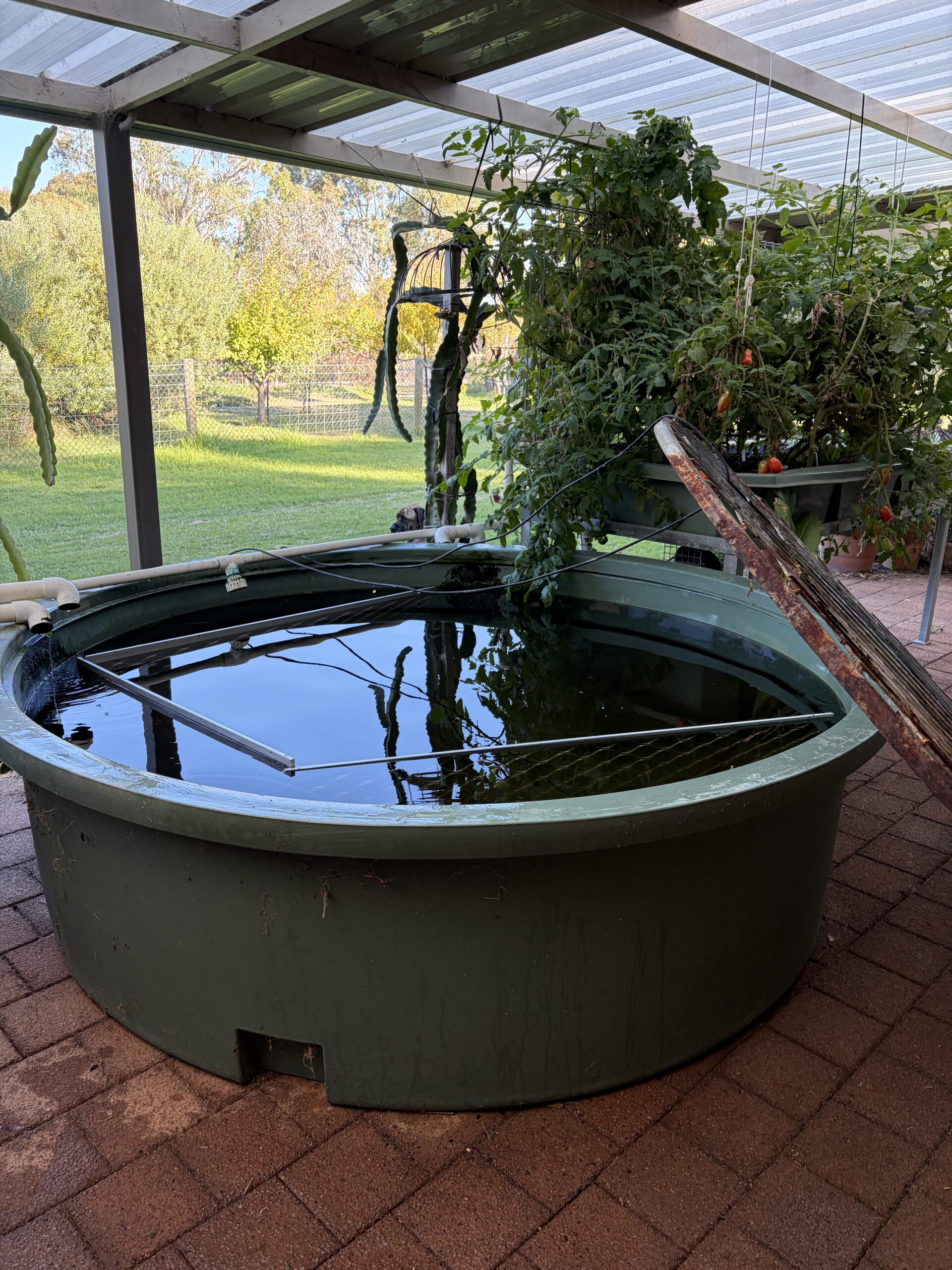
We chose a lovely calm autumn day to harvest fish from our aquaponics systems as our freezer supplies had been used up. We tend to do a big harvest every now and then, which involves removing the lids (which we use as we have grandchildren) and pumps, creating barriers and then scooping with nets!
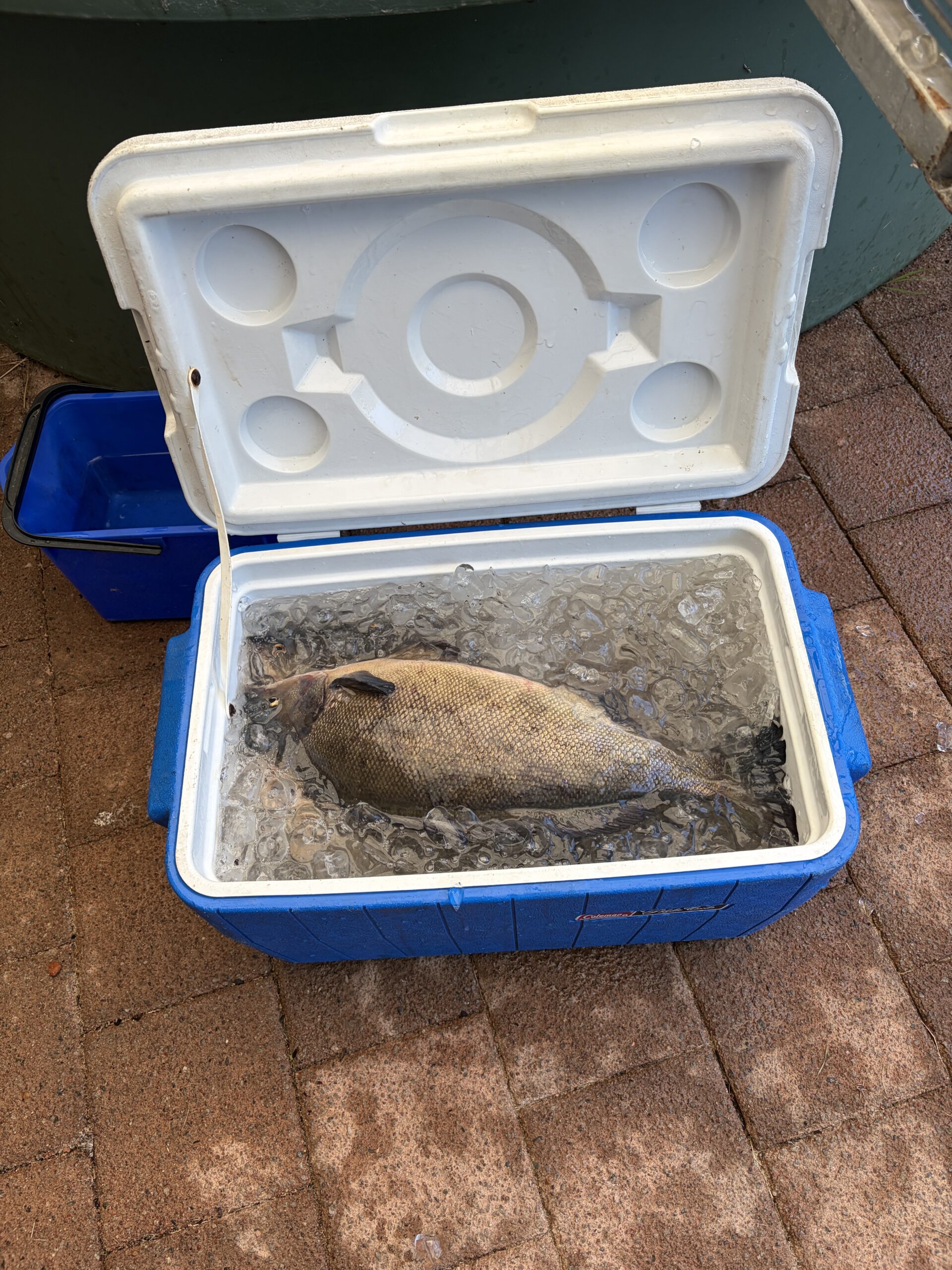
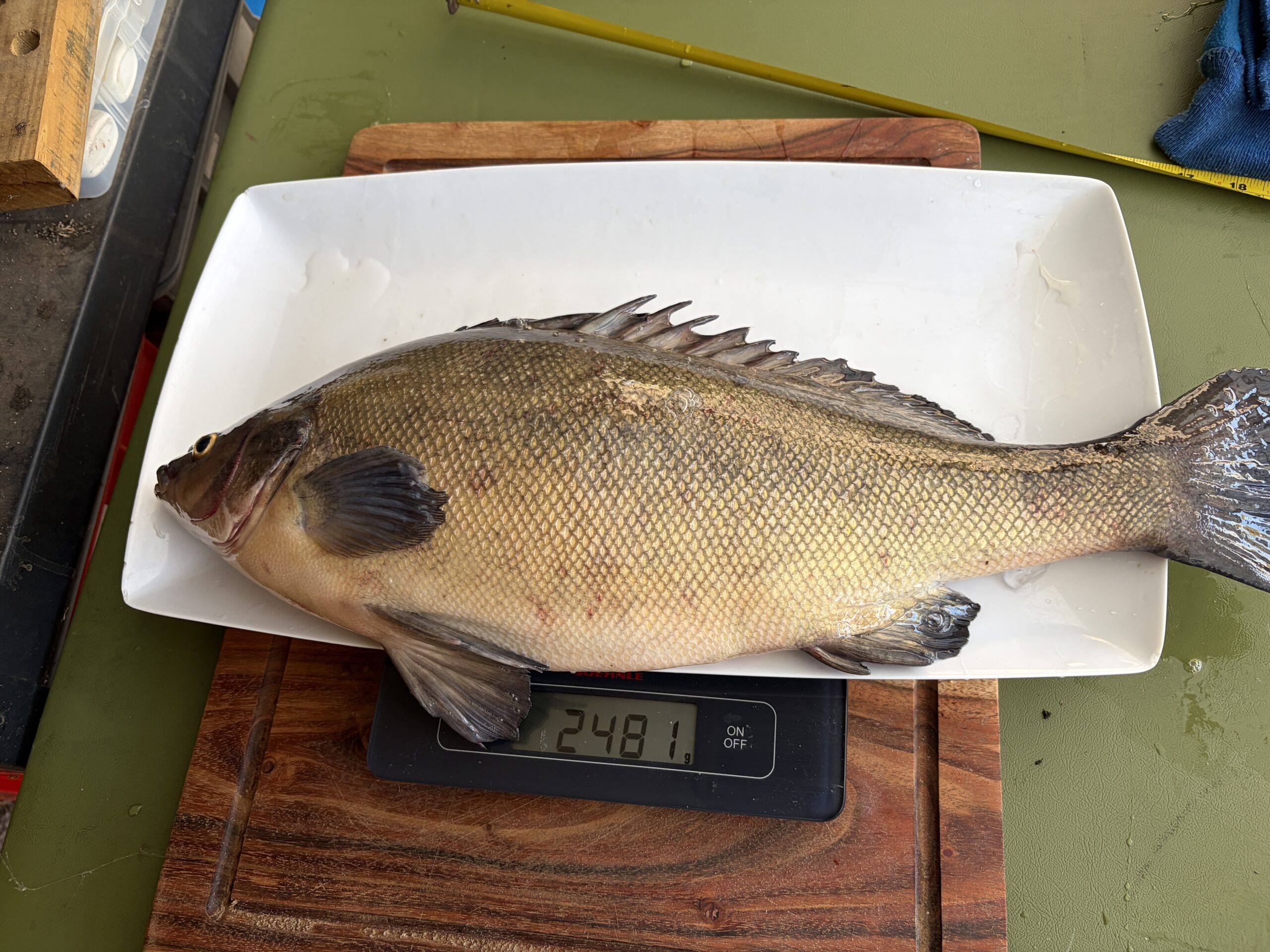
As each decent/plate sized fish is caught they are placed in eskies of ice slurry. This harvest resulted in 17 fish of filleting size, including this whopper that barely fitted in the esky!
50cm long and weighing 2.48kg!
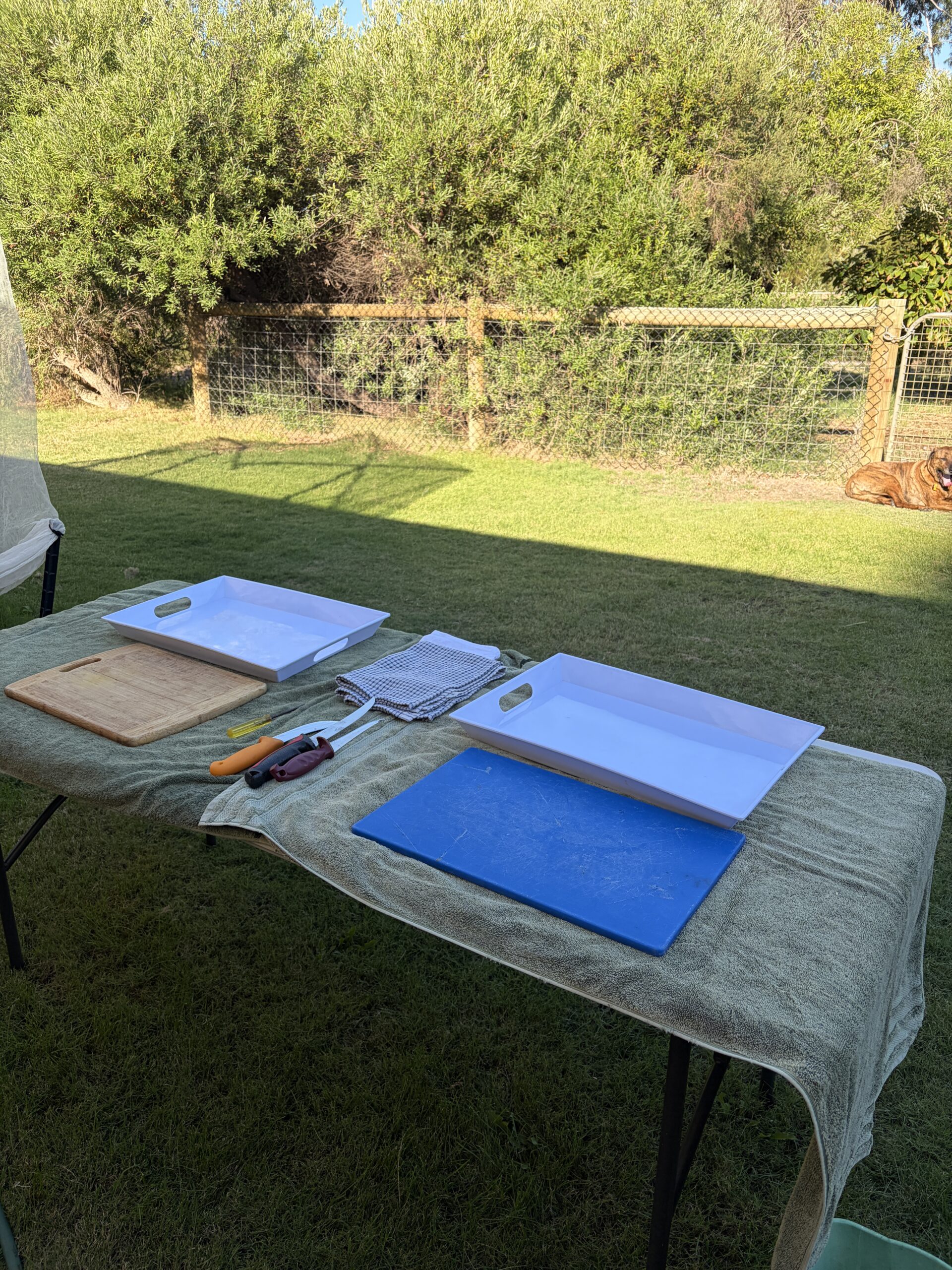
We set up a filleting station in the shade outside, so clean up is so much easier!
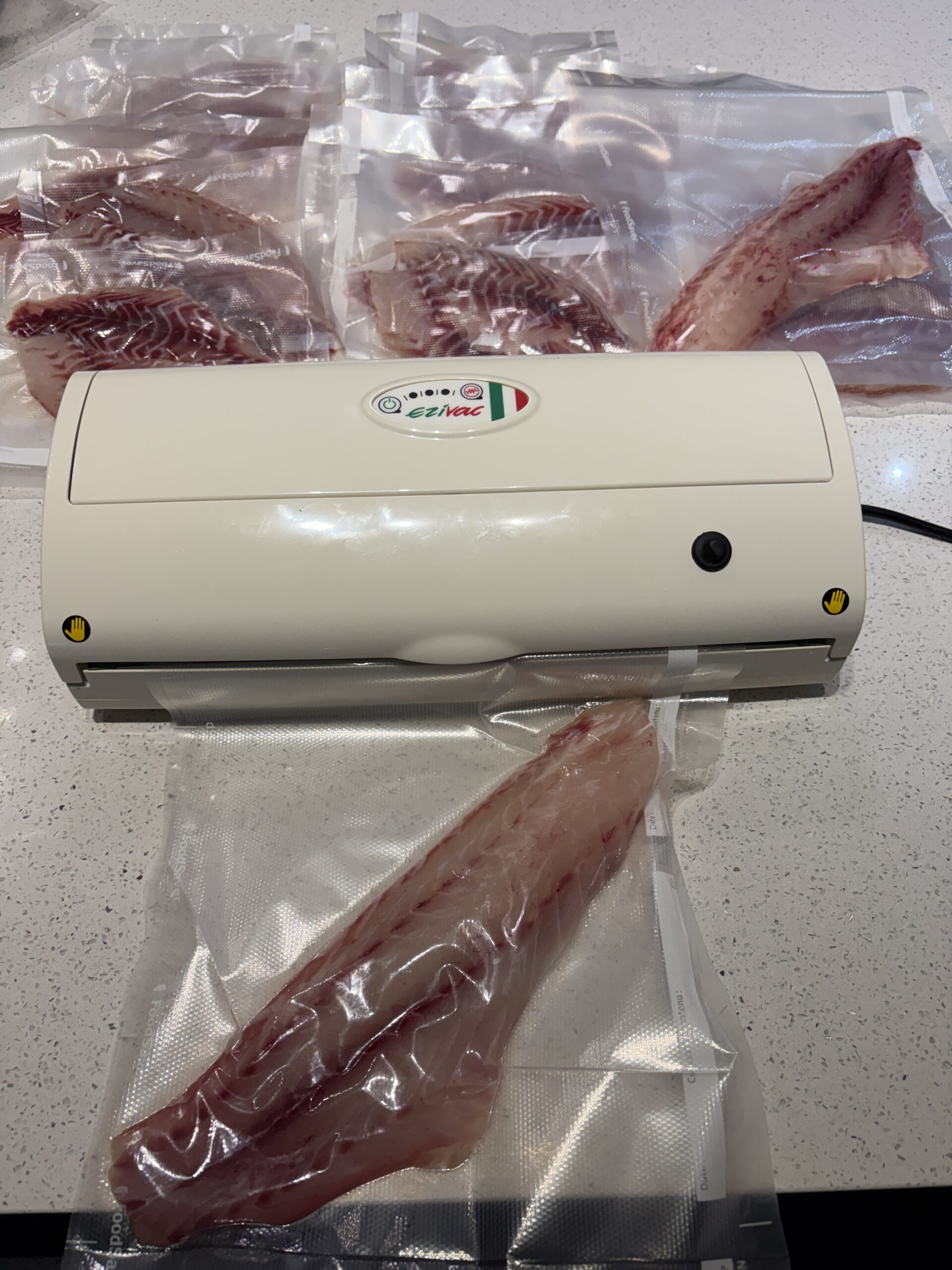
These days we only fillet for the freezer- they take up a lot less space than a whole fish and are much more versatile to use. Once we have all the fillets ready, they are vacuum packed, labelled and frozen ready for use!
The whopper fish was so big we packed each fillet separately as it will feed both of us!
Finally got around to rendering a heap of beeswax, which we had kept from the last few honey harvests, and then making a few beeswax products to stock up the shelves in the ‘Farmacy’!
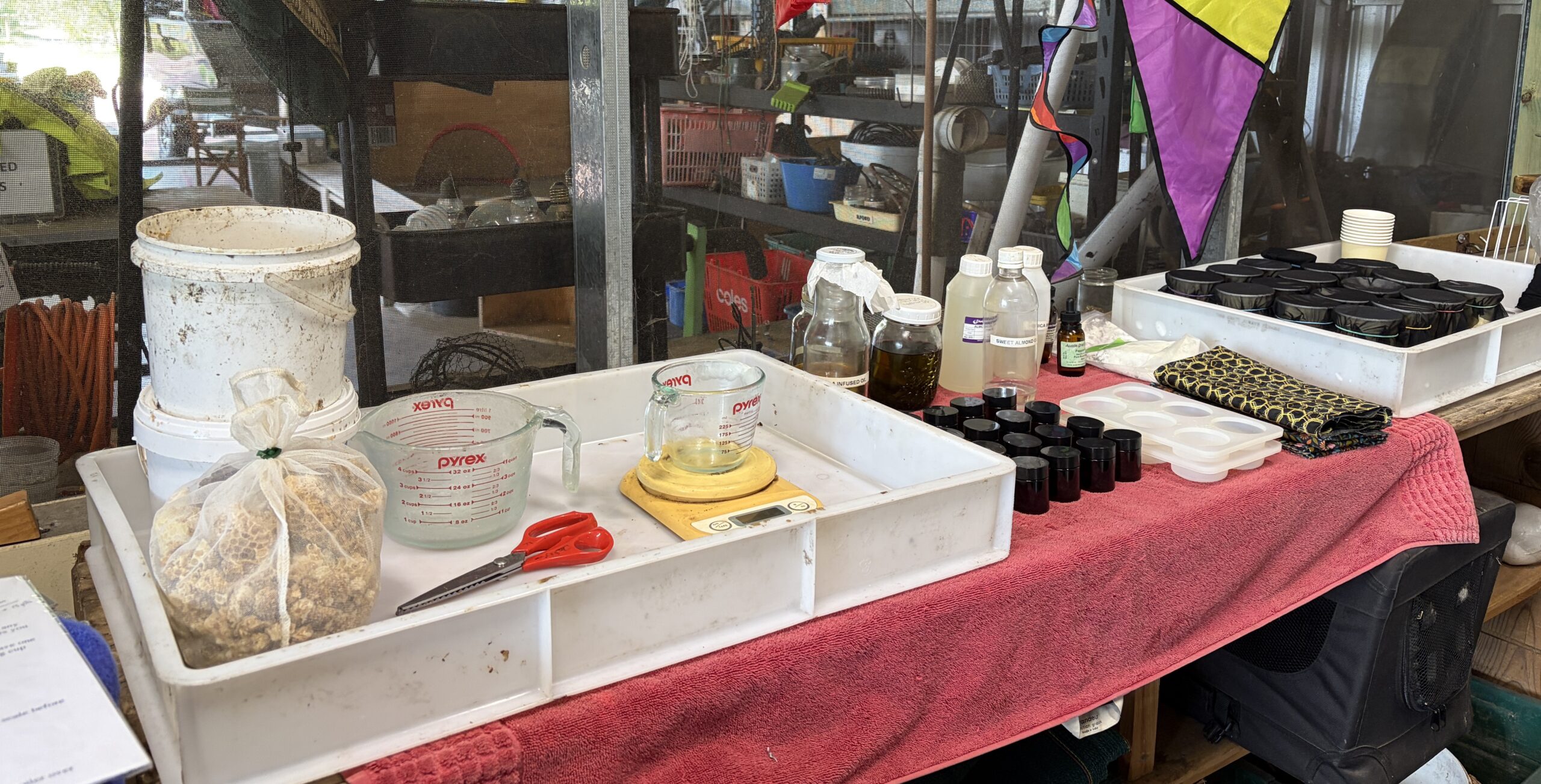
Working with beeswax is quite messy, so we do it in the shed!
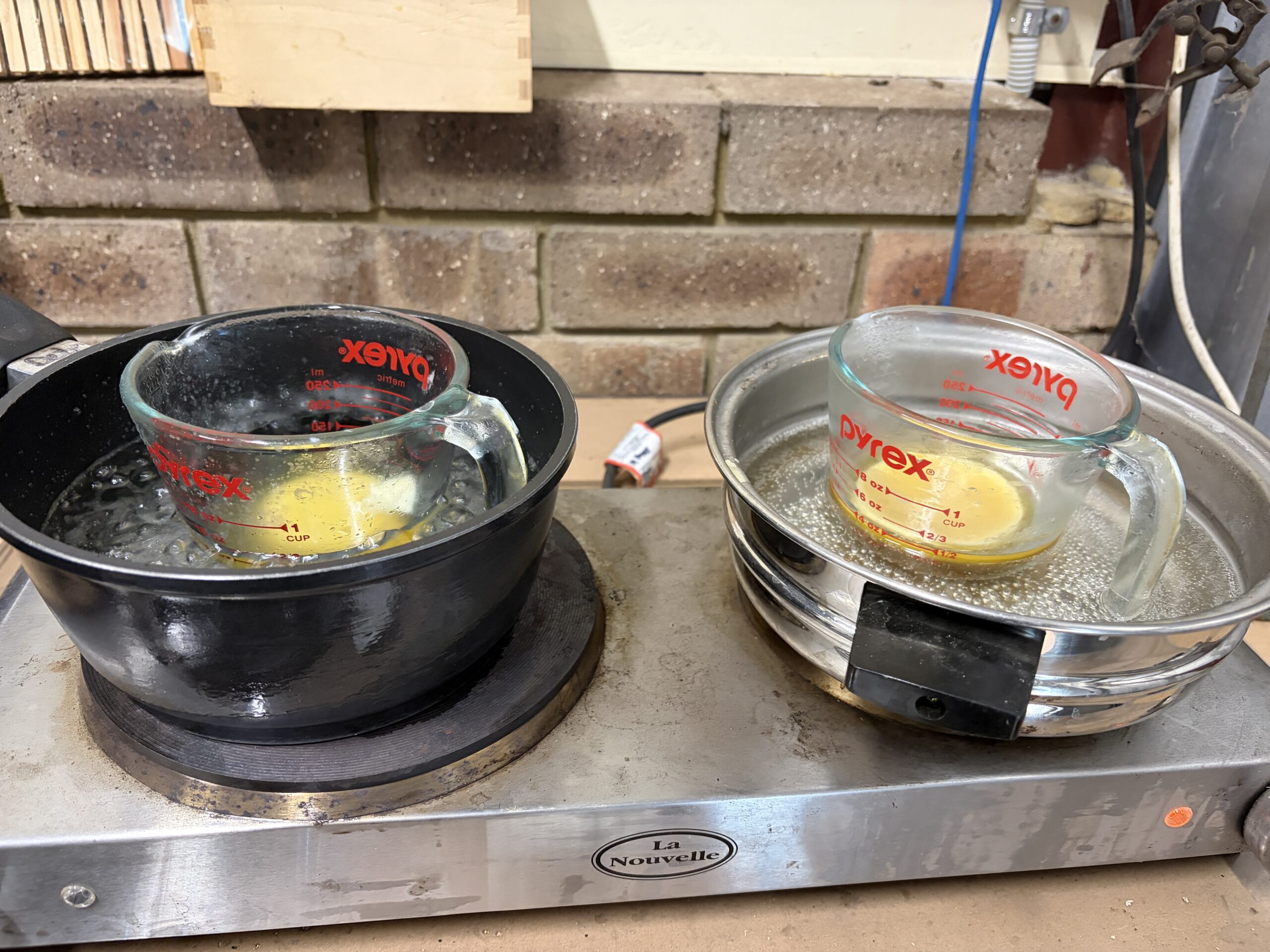
We render our wax in two stages usually, using gauze paint bags to hold the cell scratchings, which are then placed in a pot of water to melt (leaving the bits of bee and debris inside the bag). The bag is then removed and discarded (or re-used if it isn’t too dirty), the pot removed from the heat. Once the beeswax cools, it sets as a disk on the top of the water and is easy to remove from the pot of water. If the wax scratchings were fairly clean, this is sometimes all that is needed, however for really clean wax for products such as lip balm, it is cleaned if needed and then remelted in a jug placed in a pot of water.
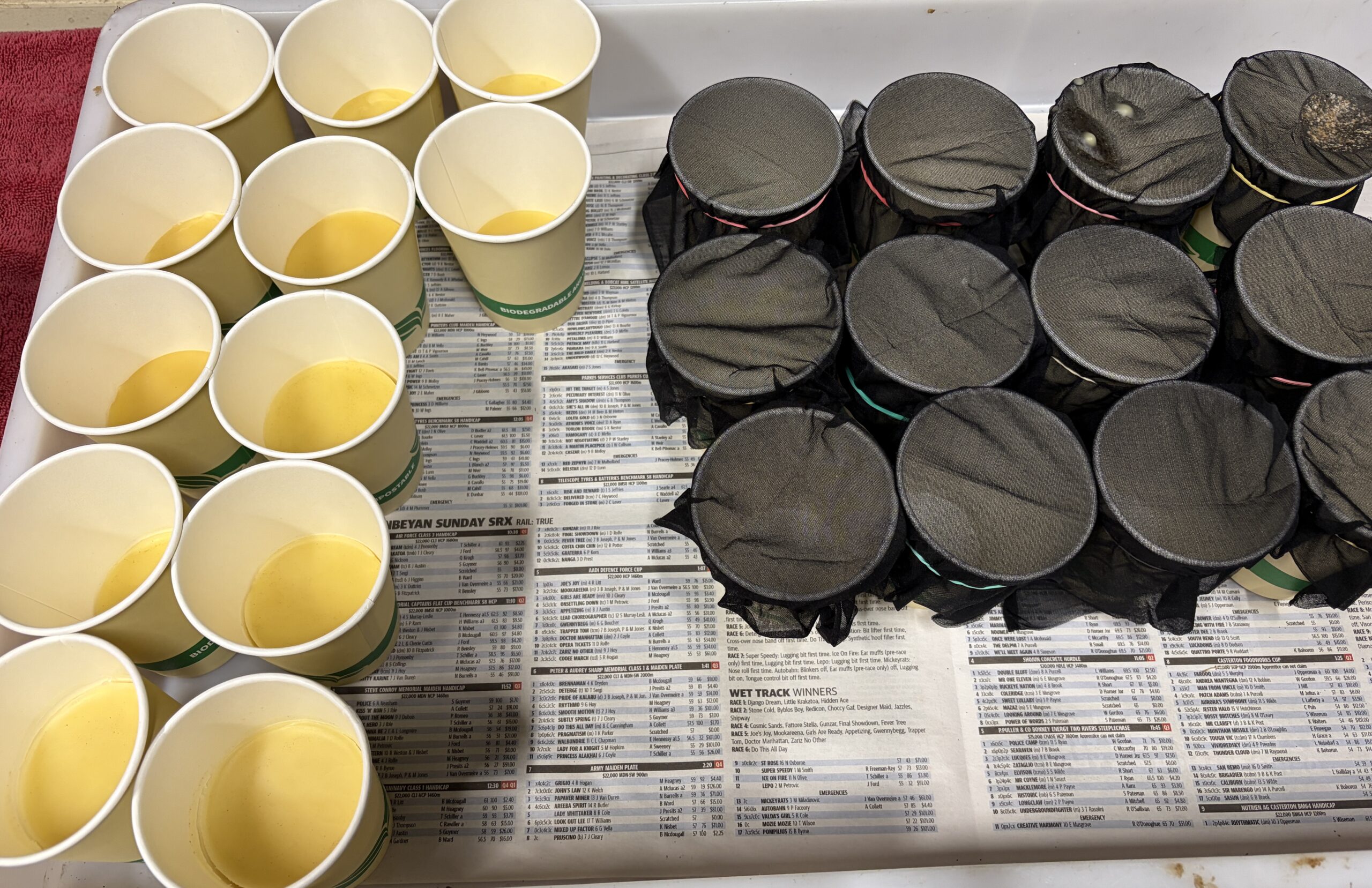
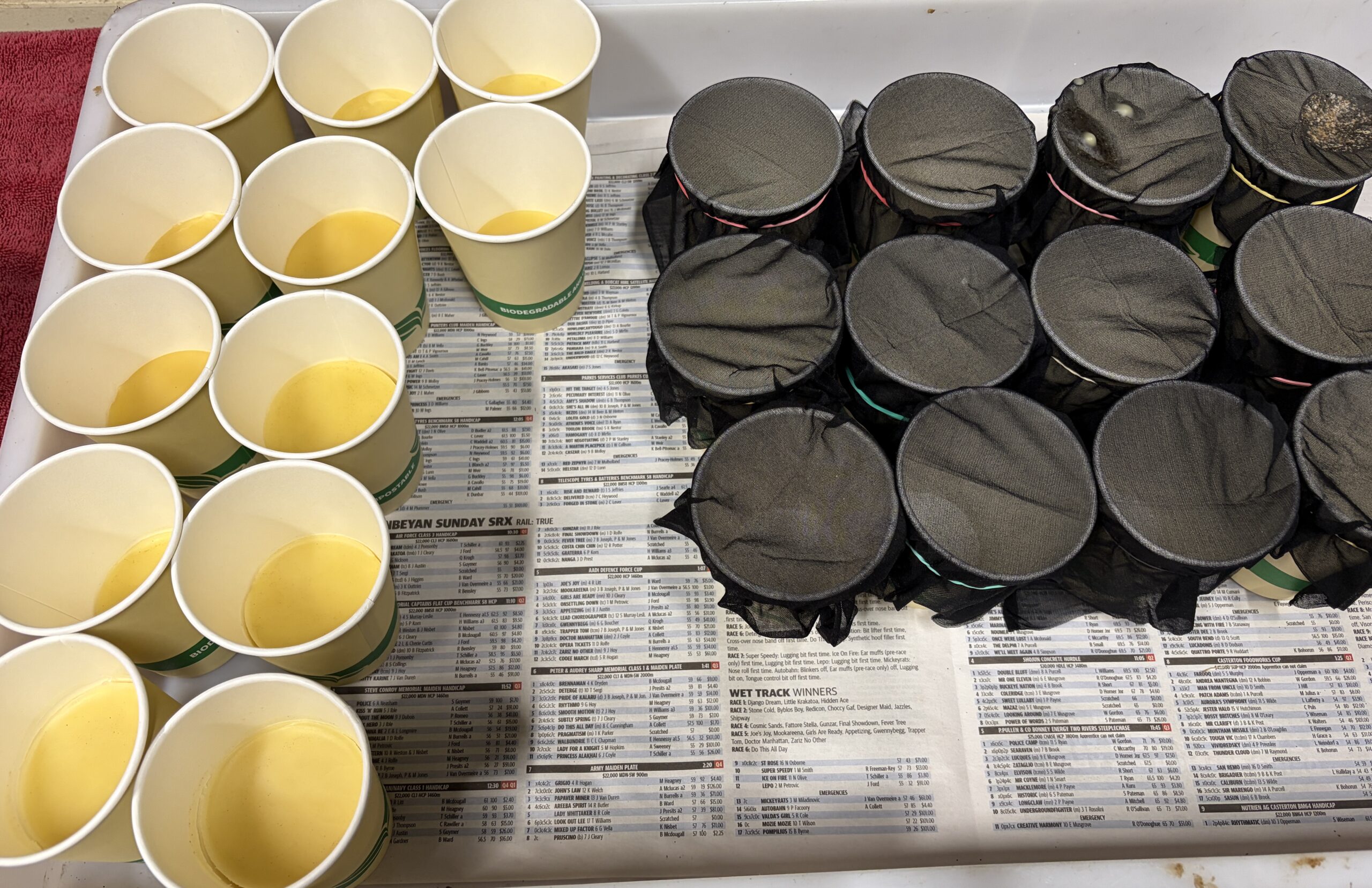
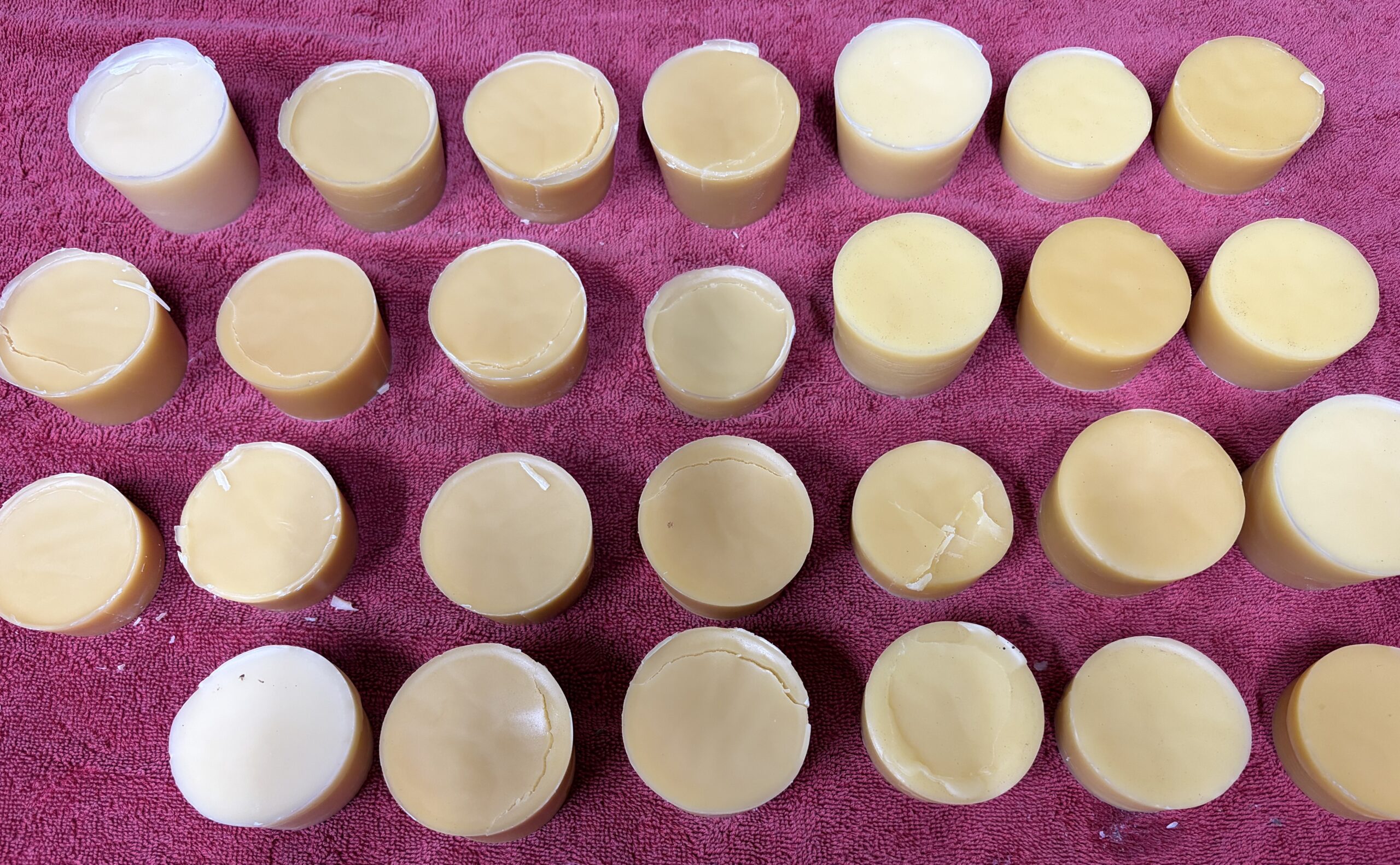
Once the wax has melted again, it is then strained through stocking stretched over reusable paper cups……pouring in just enough to make small blocks that are easy to melt and use in products.
Once the wax has set, the nice clean block of beeswax is easy to remove from the cups, and the cups can be reused another time.
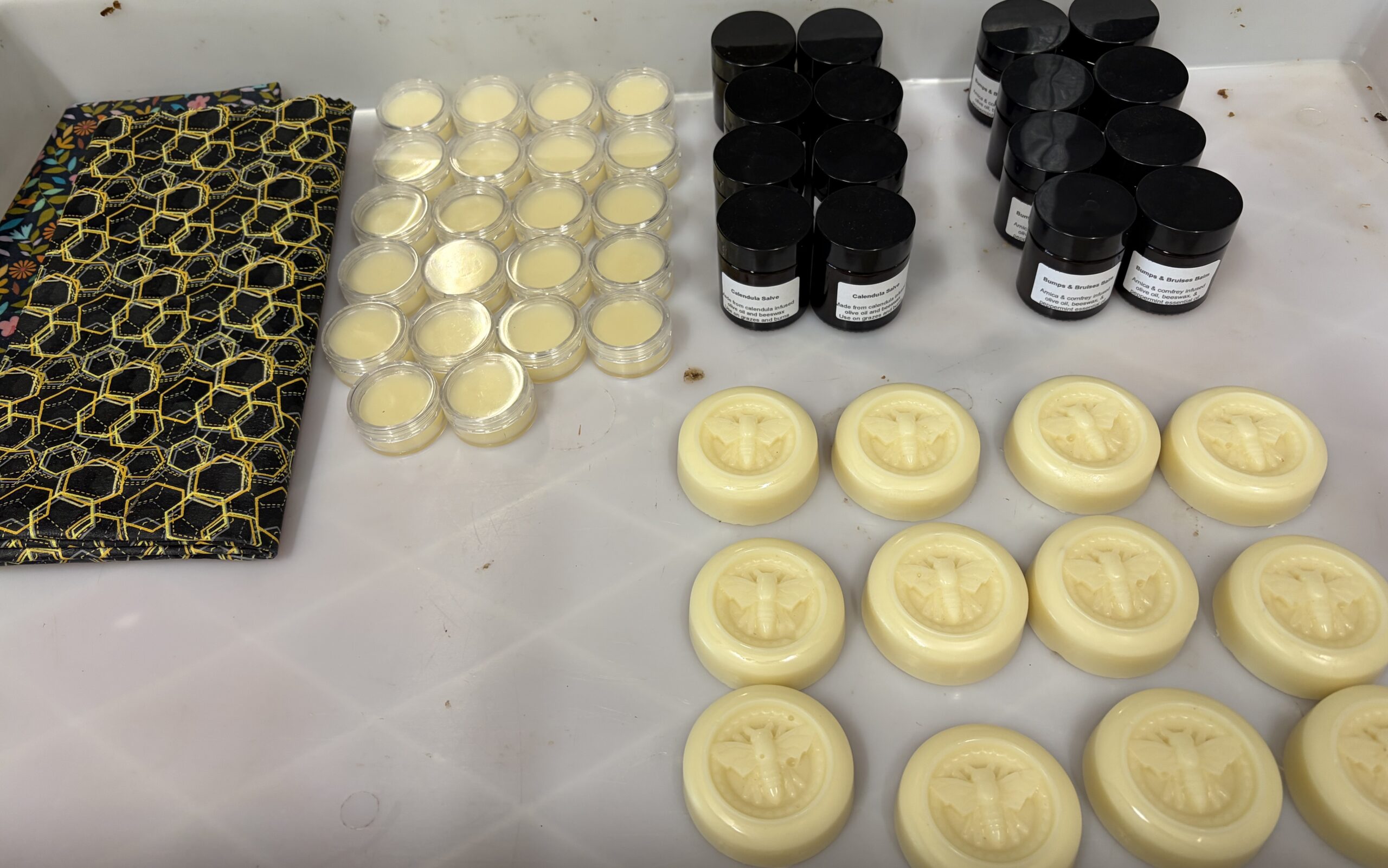
Then the product making began! Beeswax wraps, lip balm, calendula salve, bumps and bruises salve, and calendula lotion bars.
We are well set up with beeswax products for another year or so now!
It has been a warm end of summer, with most days over 30 and some getting up to 40 degrees! The warm weather has meant the growing season has continued though, and we have continued to harvest an abundance of tomatoes, beans and zucchini!
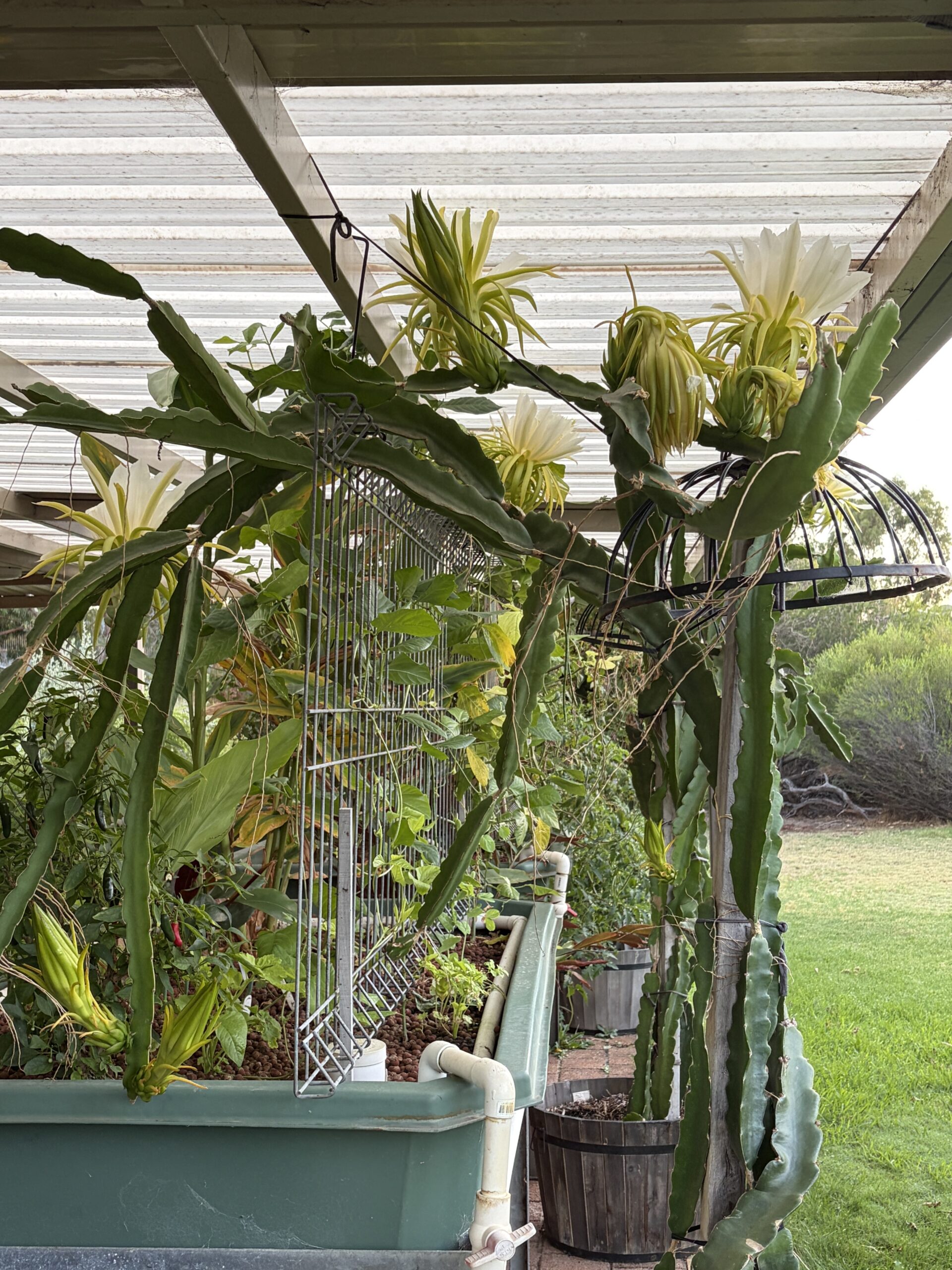
Surprising to us, the dragon fruit are starting a second flush of flowers, with at least another 7 buds appearing. This is so much better than any other dragon fruit season, and they are delicious!
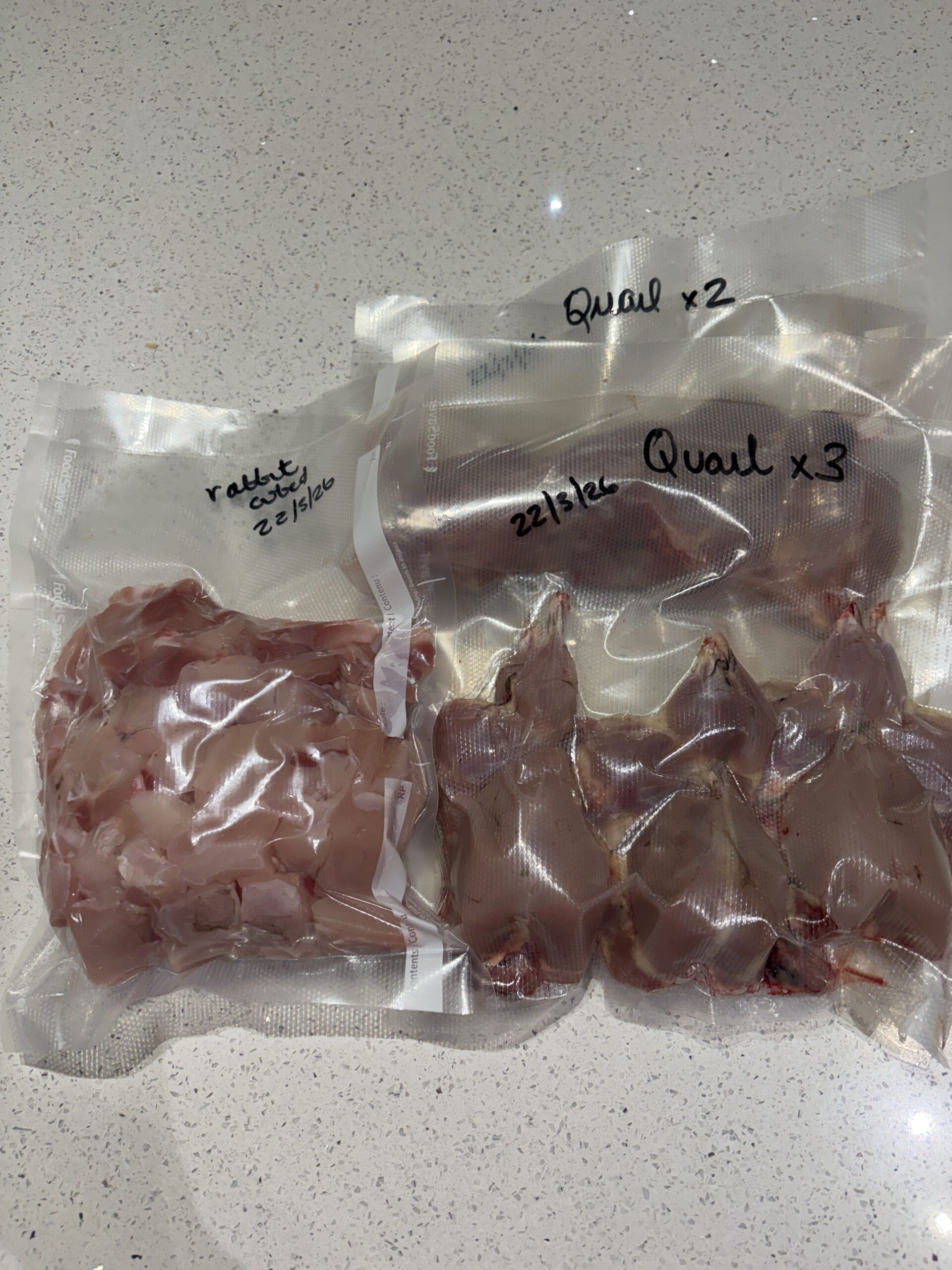
With the two lots of young quail doing so well, it was time to cull the older ones who were not laying much at all, but still eating! We now have a couple of quail dinners to look forward to, and while we were at it we also culled a rabbit and prepared it into cubes ready to make a delicious dinner!
One aspect not doing well, is our chooks- they are just not laying well at all! Usually they would have come on the lay last year, and may be trailing off now as we draw into Easter, but they just haven’t come back on the lay since last year, other than one to three eggs a day. today we have done a sort out, and separated the old hens from the new, and placed them with the three spare roosters we have (from a recent hatching). The plan is to see who is actually laying and when, to decide who to keep!
February has been busy and productive at McCarthyPark 2! Our quail hatching last month wasn’t great, with only 10 hatching, so we bought some tiny day old quail chicks and added those to the brooder box, and transferred the older ones to a cage outside that is set up with a heater (but fortunately isn’t as stinky as it is outside!). They are all doing very well, and growing so quickly!
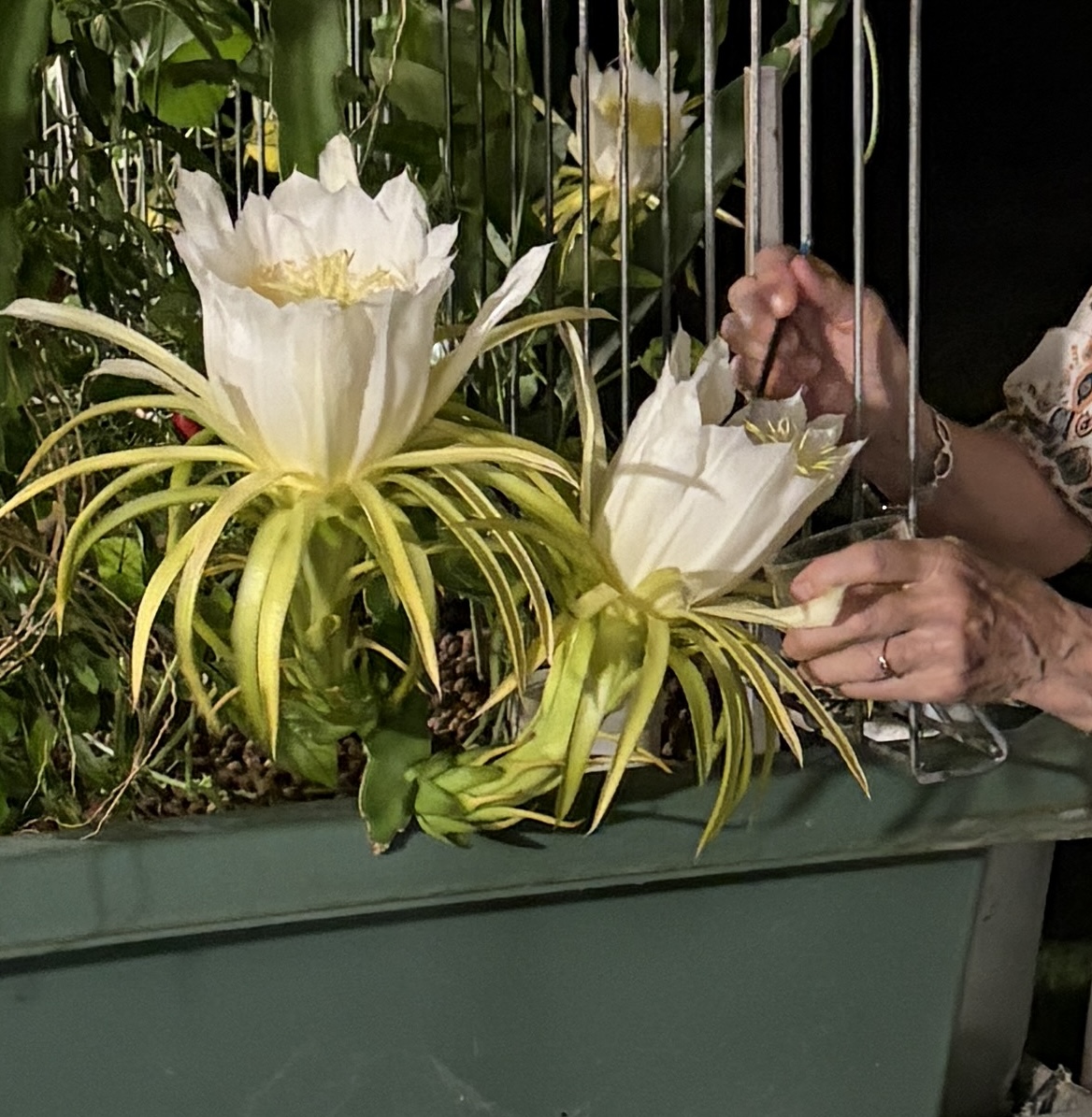
We have also had great success with our dragon fruit again this year, with a total of 24 flowers turning to fruit. It is particularly good that the flowering has been a bit better spaced out, so we are able to pick and eat some while the others ripen. We hand pollinated again just to be sure as some of the flowers are under the pergola roof.
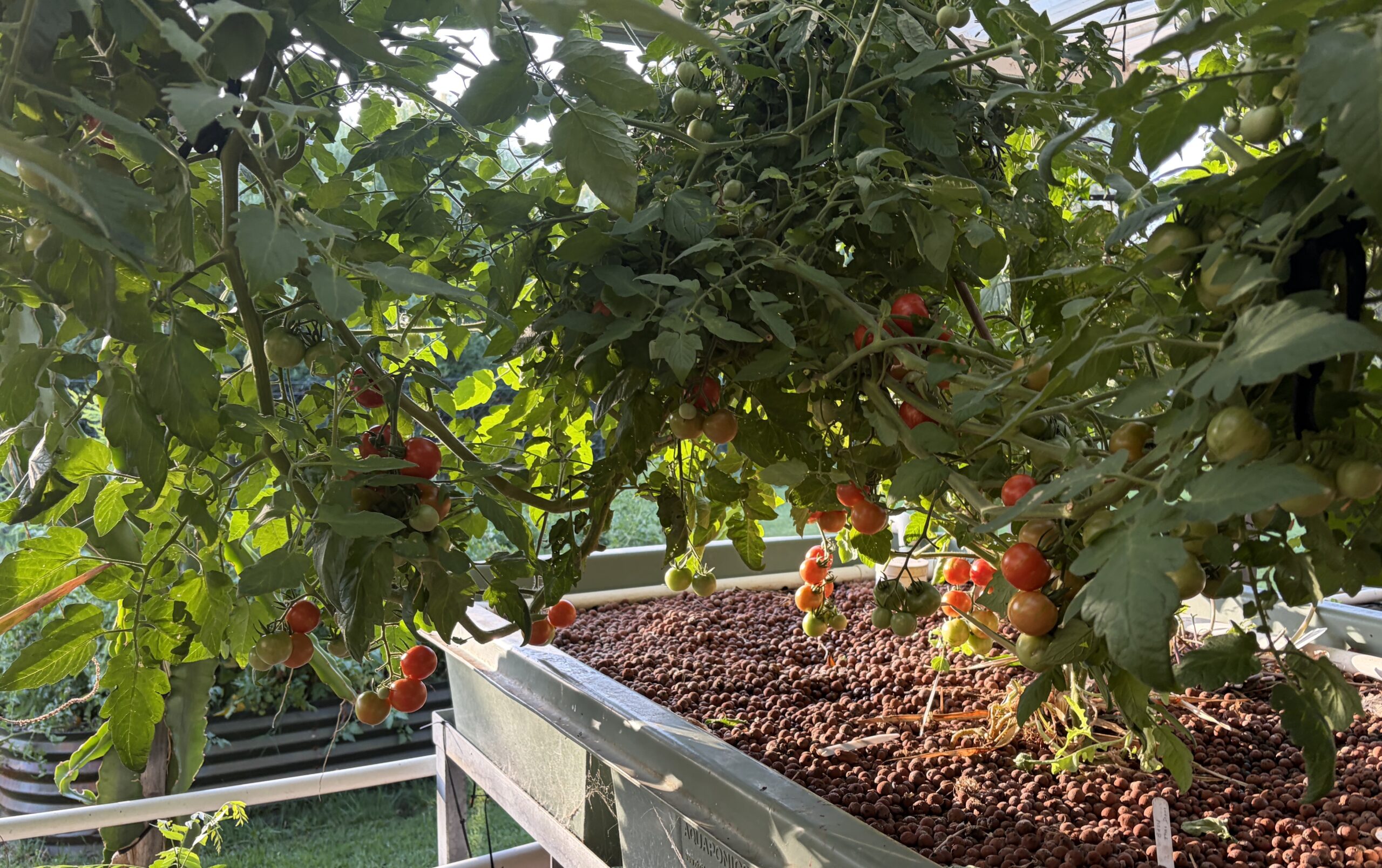
And tomatoes….. oh my goodness we have had such an abundance, just from four plants in the aquaponics- a Roma, yellow pear, and two different cherry tomatoes.
This is just one, that produces the most beautiful large cherry tomatoes!
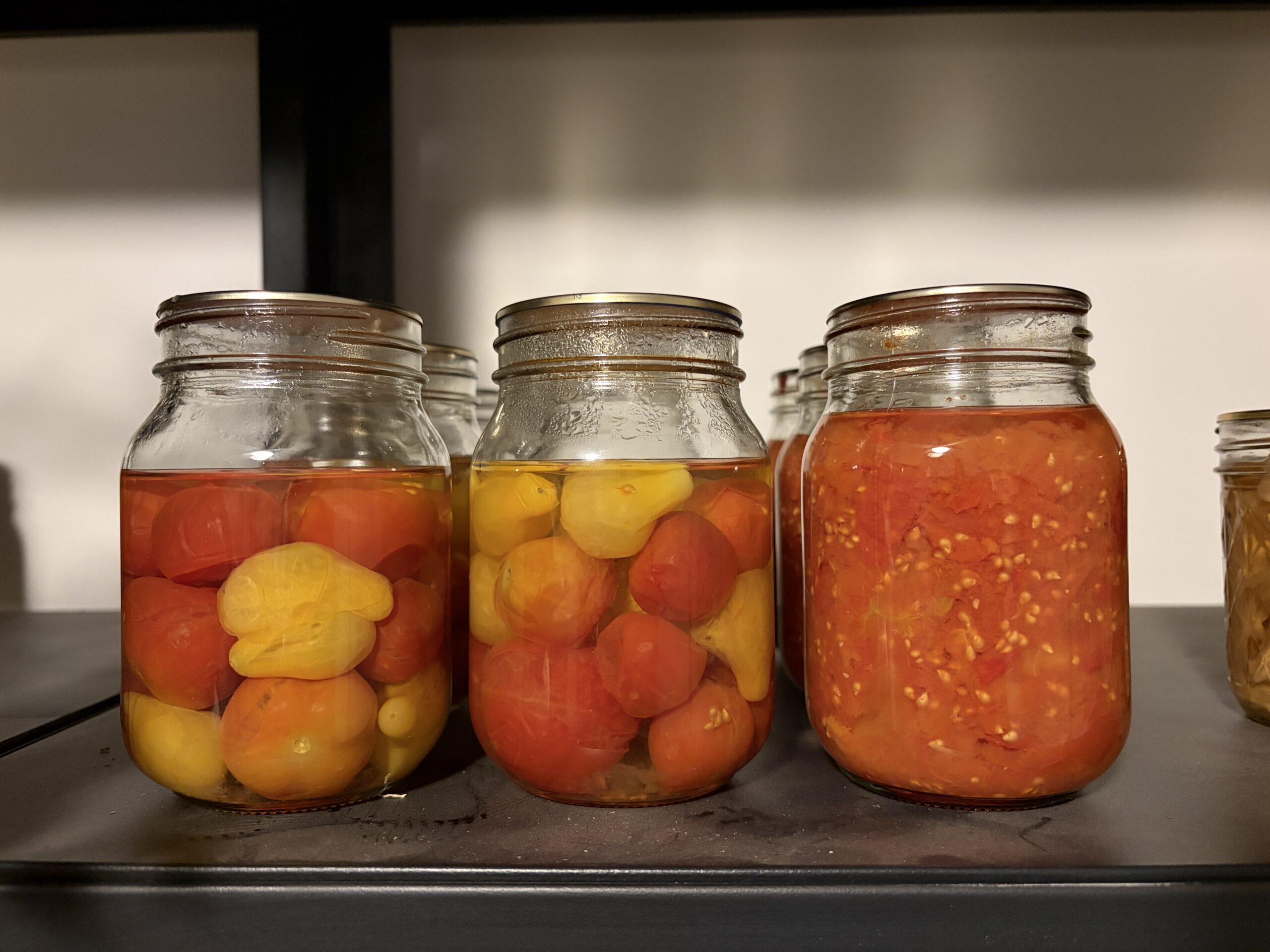
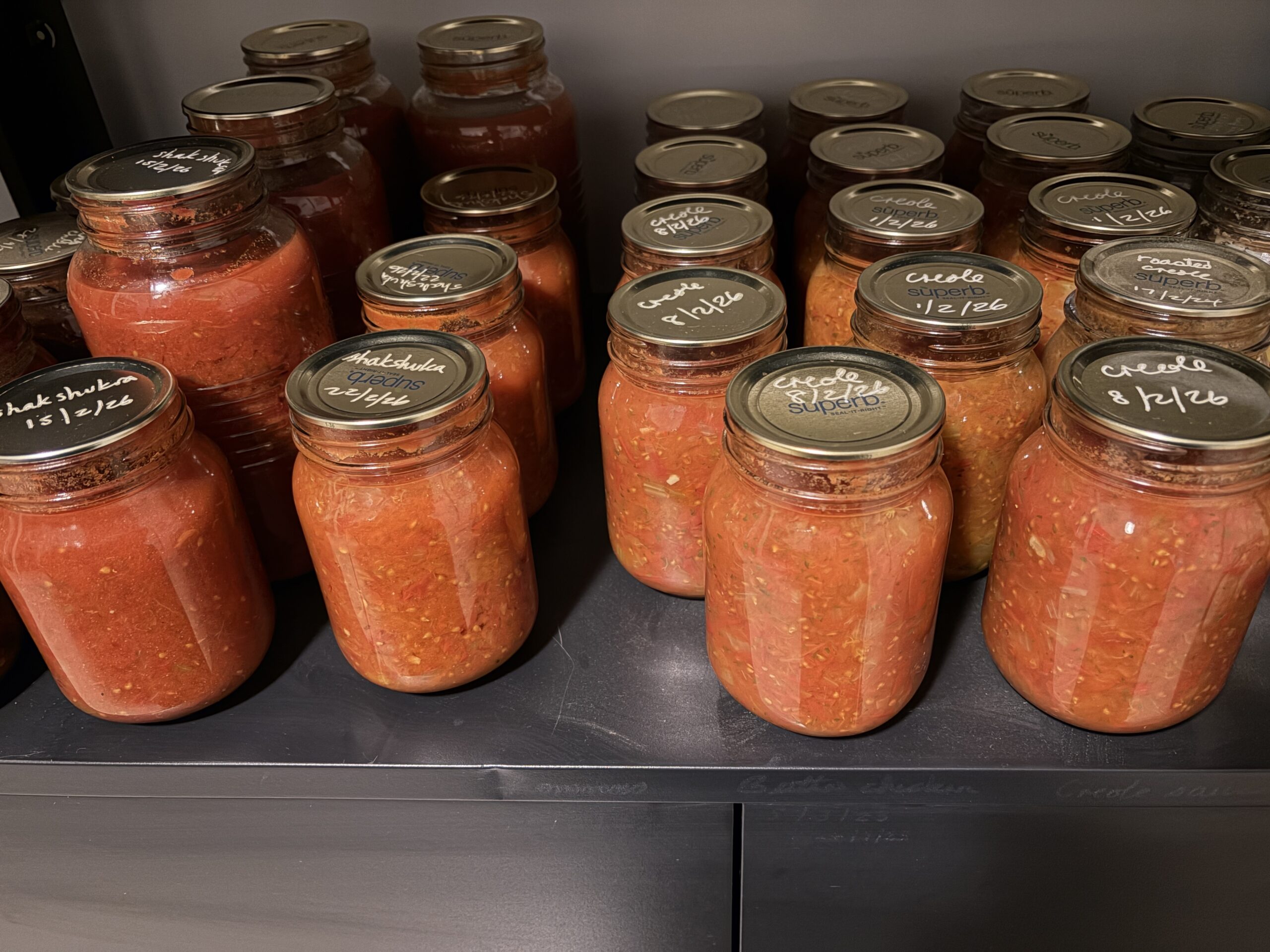
Every weekend has been spent preserving, as well as eating fresh and giving away heaps! So far this summer we have canned cherry tomatoes and crushed tomatoes….
The cherry tomatoes siphoned a bit, but will be ok for a while.
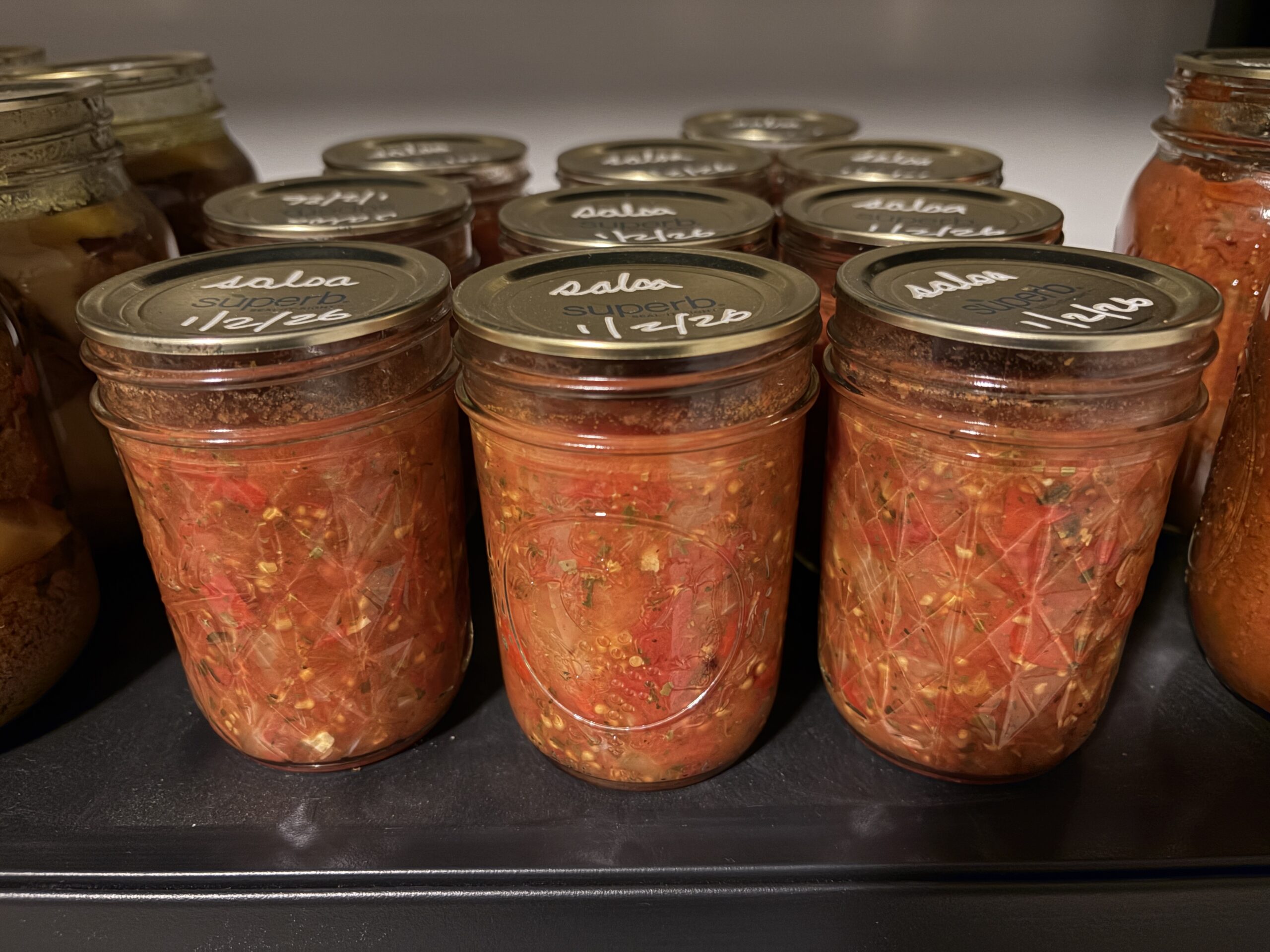
We have also canned (and eaten!) jars of shakshouka, creole sauce and salsa- we have plenty to last for a while once the tomatoes stop producing (no signs of that as yet though!)
The shakshouka was made by adapting the spices in the Ball Book recipe for spicy creole sauce- yum!
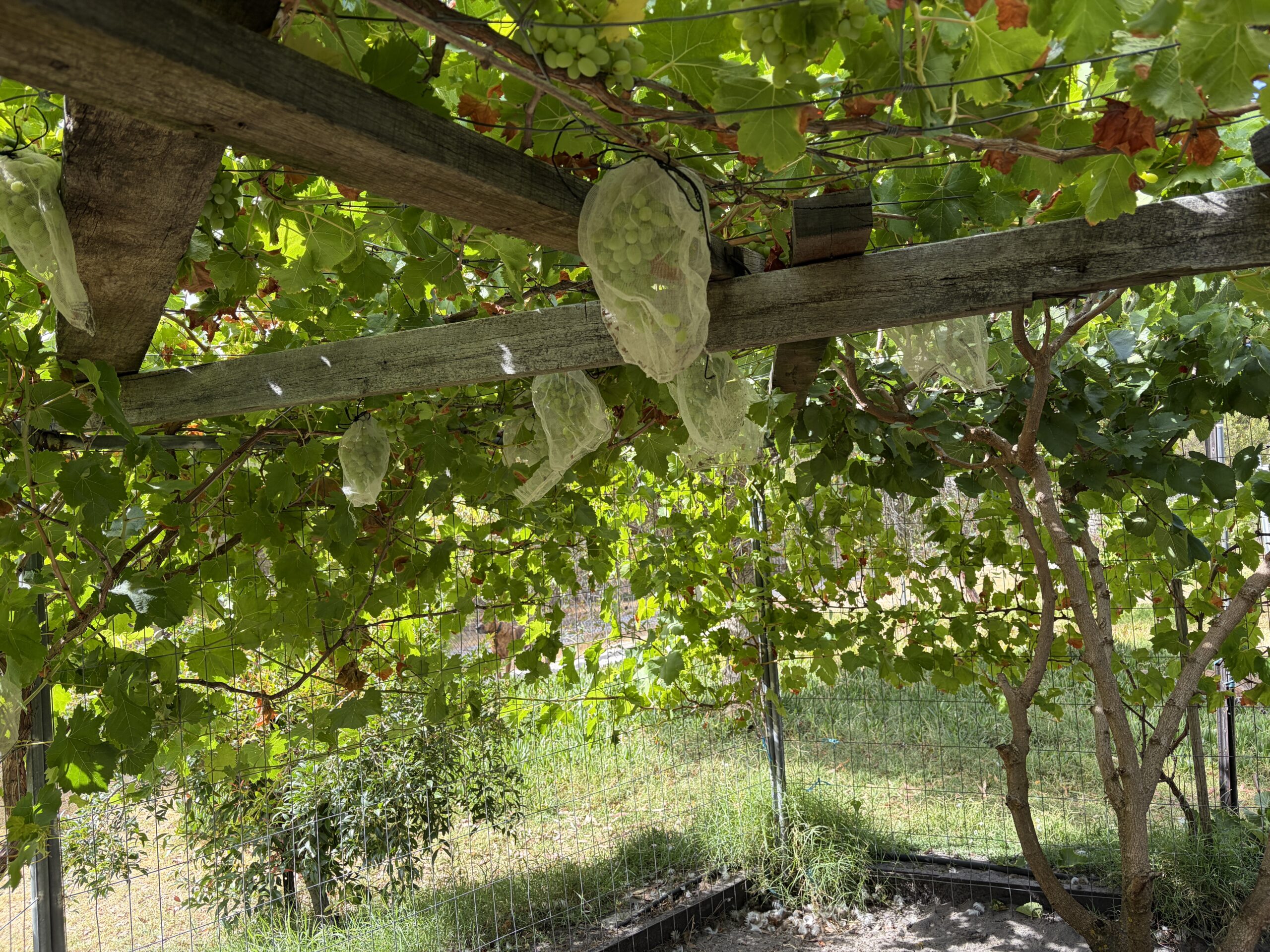
We have had a mix of weather so far this summer, with some heat but also lots of wind. Despite this, we have had some good growth – particularly our grapes that were planted around the ‘duckagon‘. They have really bushed up and now form a fabulous shady pen for the ducks, and there are lots of bunches of grapes too!
The bees seem to have finally settled….. at least one hive anyway. After some extensive bee dramas, which involved completely emptying each hive some distance away and then setting it up again and letting the worker bees fly back, we installed a nuc into each, complete with a queen and brood. Hive 1 is certainly on its way, with the new queen visible and laying well. Hive 2….still not sure, but the boost from the nuc has helped but there was no evidence of a laying queen, so we have put a new one in yet again! Fingers crossed.
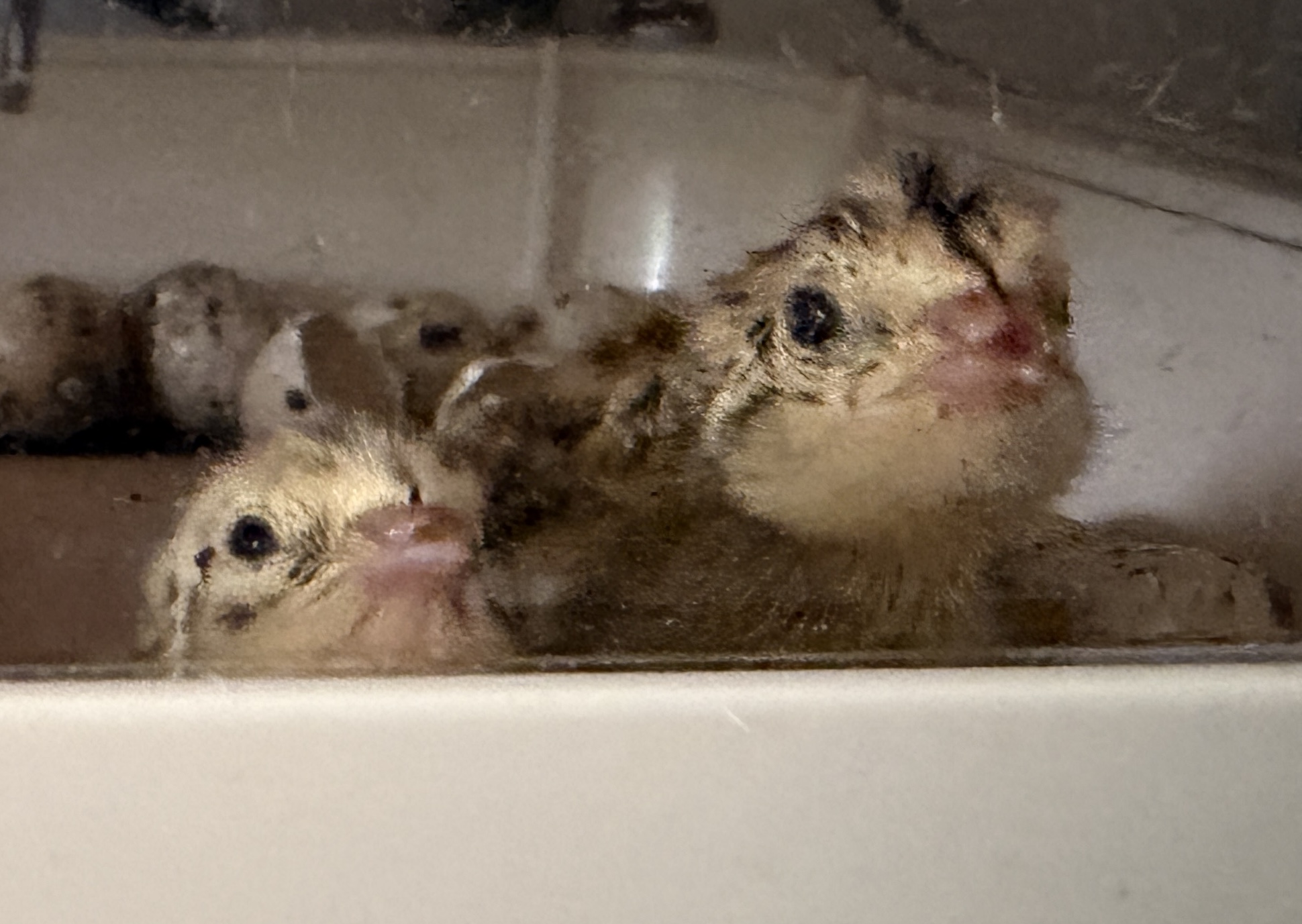
As we usually do in summer, we have incubated some quail eggs and now have 10 very cute quail chicks. They are so tiny when they hatch, but grow and grow at a great rate! These little ones were hinting that it was time to come out of the incubator and into the brooder with some food!
We have generally been fortunate with our bees- there have certainly been tricky times and disastrous times like when a fallen branched smashed a hive. Over the years it has been really helpful to have two hives- when one’s weakened we we have had the other to help strengthen, either by sharing honey frames or brood frames.
Currently though we have issues with both hives! In October both hives had brood and queens, but one was a bit aggressive so we figured we needed to requeen, which we did. Since then we have lost both queens in both hives, so both were requeened (one for the second time).
Over the past two -three weeks, the hives have settled and we can be pottering out there with no issues. Great, we thought- the queens must have been accepted as the hives are now settled.
But no, today revealed no sign of queens in either hive, no sign of brood in one hive and only drone brood and multiple queen cells in the other. This means we must have either a drone laying queen (who wasn’t mated properly) or a laying worker bee (who only ever lay drones).
We have never had this situation before, so after researching we now know how to tell the two situations apart- laying workers lay multiple eggs in each cell, whereas a drone laying queen still lays one egg per cell. In each case though, the hive is usually aggressive, but ours aren’t!
So, tomorrow it is back into each hive with a magnifying glass to see if we have multiple eggs in cells, single eggs in cells, or no eggs in cells……….. then we make a plan.
We have finally had some warm, sunny weather, and the soggy ground has started to dry up at last. The birds are singing and nesting, the insects are buzzing…..and the weeds are growing!!
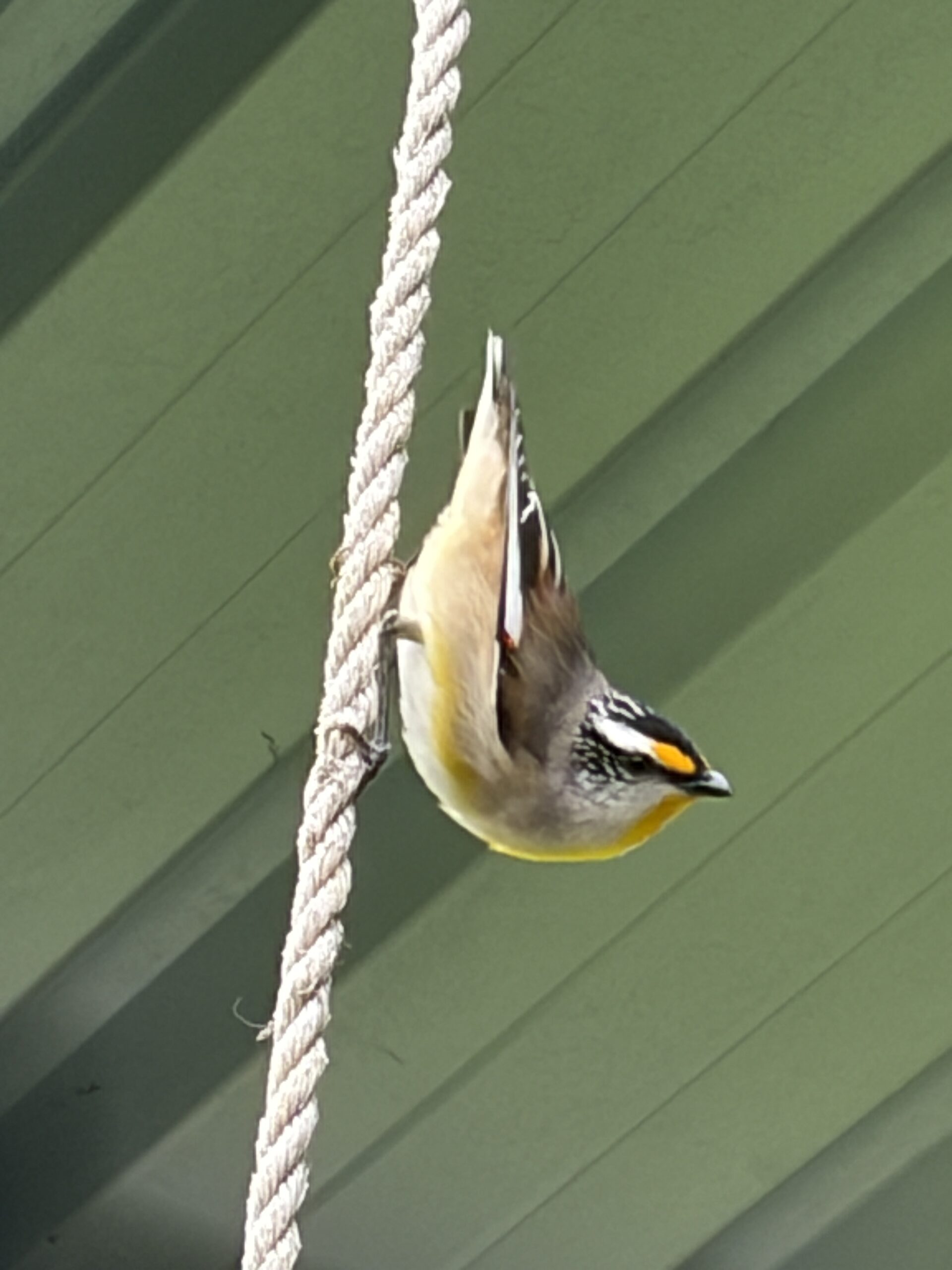
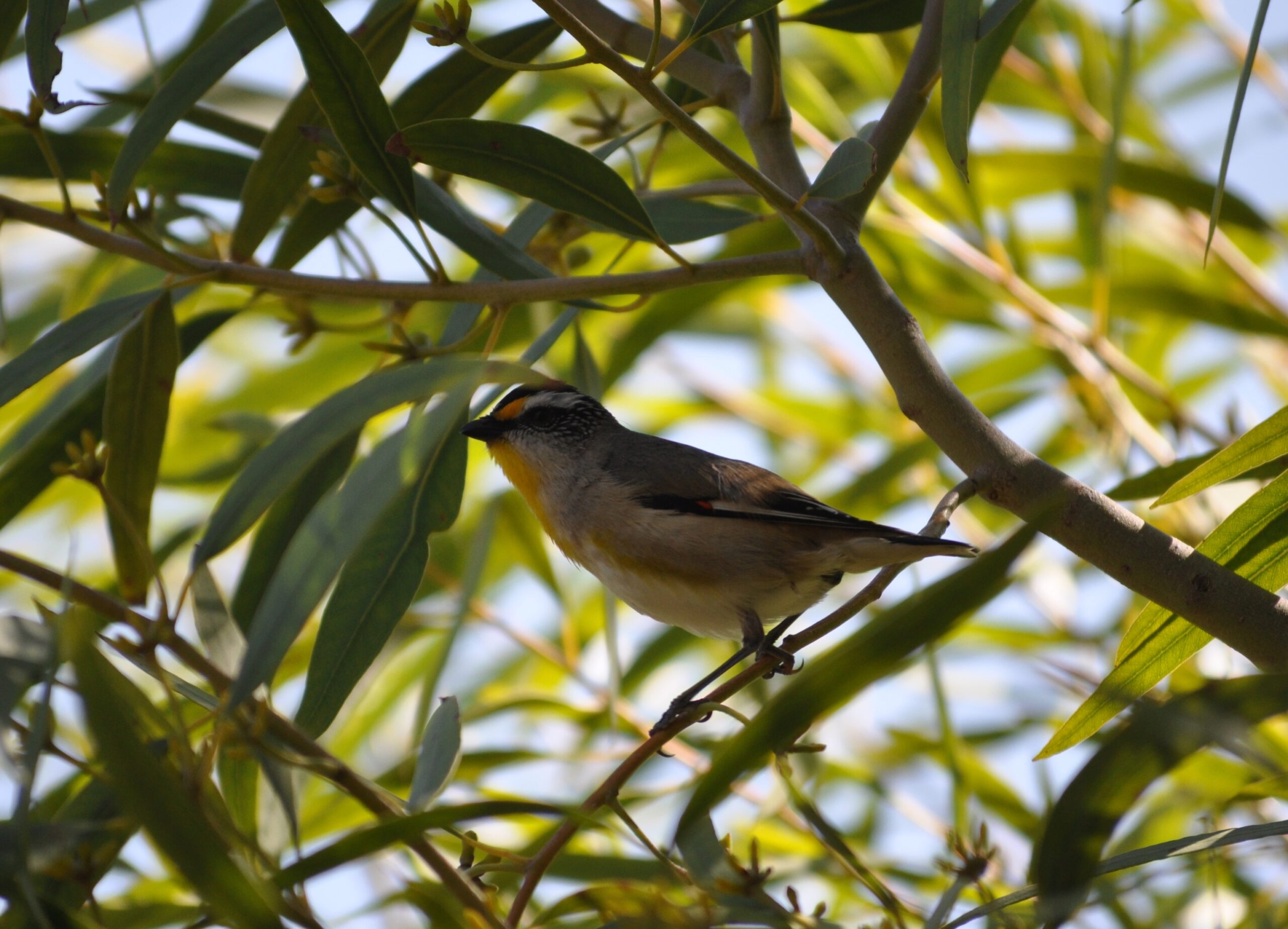
We have had a very vocal pair of Striated Pardalotes near the shed the last few days- their call is amazing, and carries all the way up to the house!
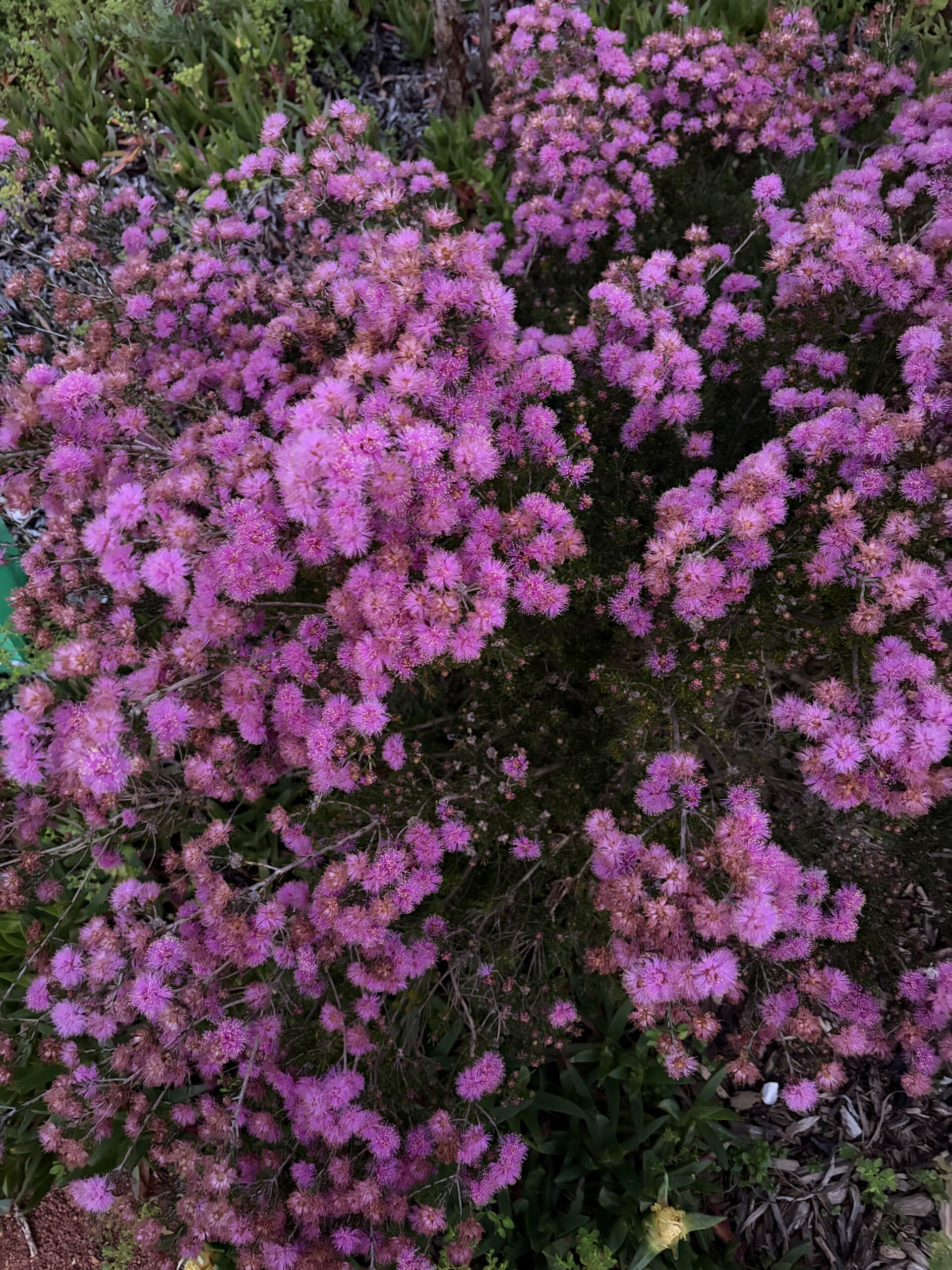
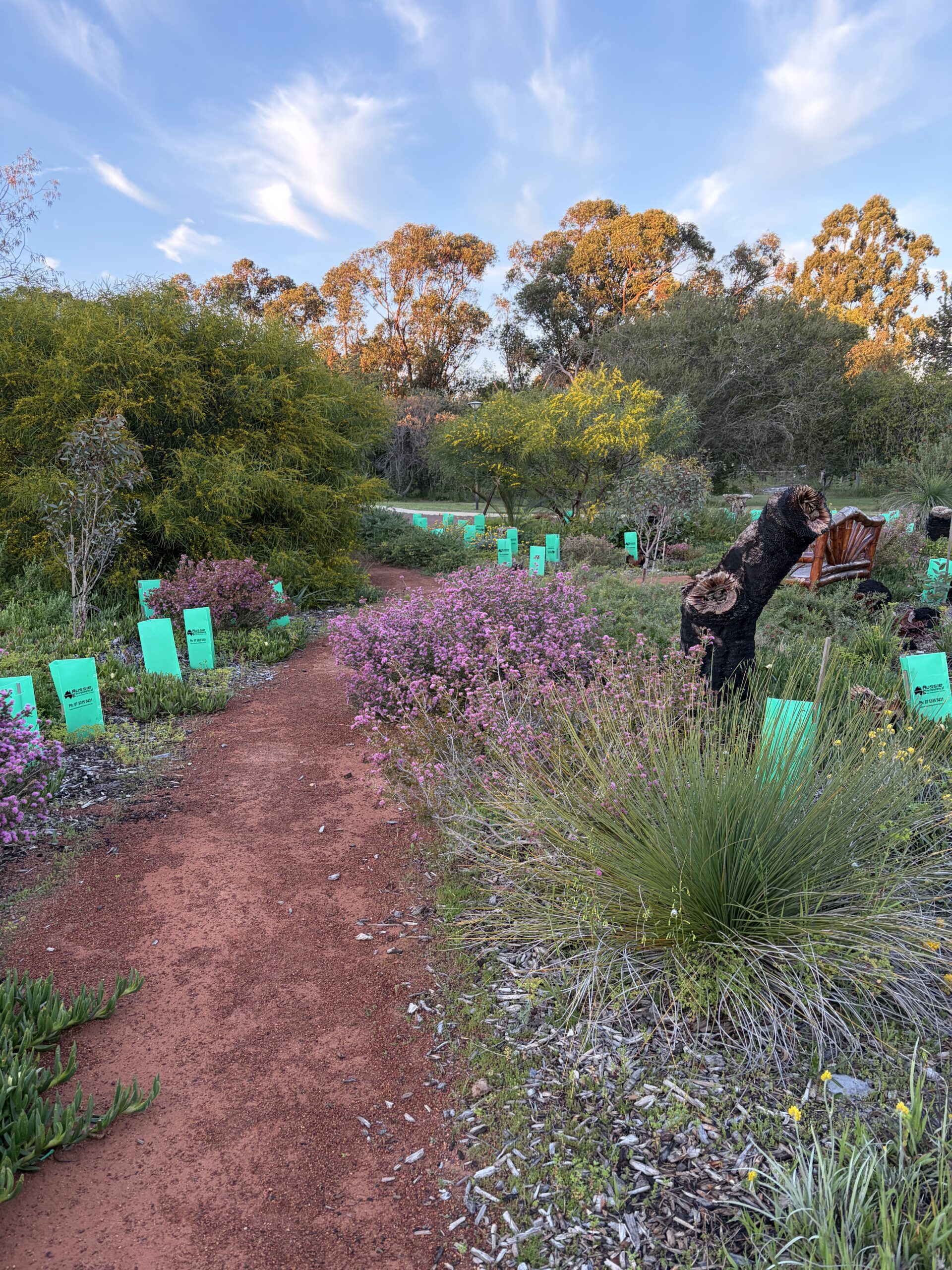
Apart from weeding, pruning the roses now the risk of frost has passed, and generally tidying up after the cold and wet, we also had a new project! When we moved into McCarthy Park 2, we vowed to reduce the amount of lawn, and therefore the need to water it. We replanting the ‘oval’, a lawned circle in the driveway, with native plants, and while we have had to do some replanting in areas, it is looking fabulous!
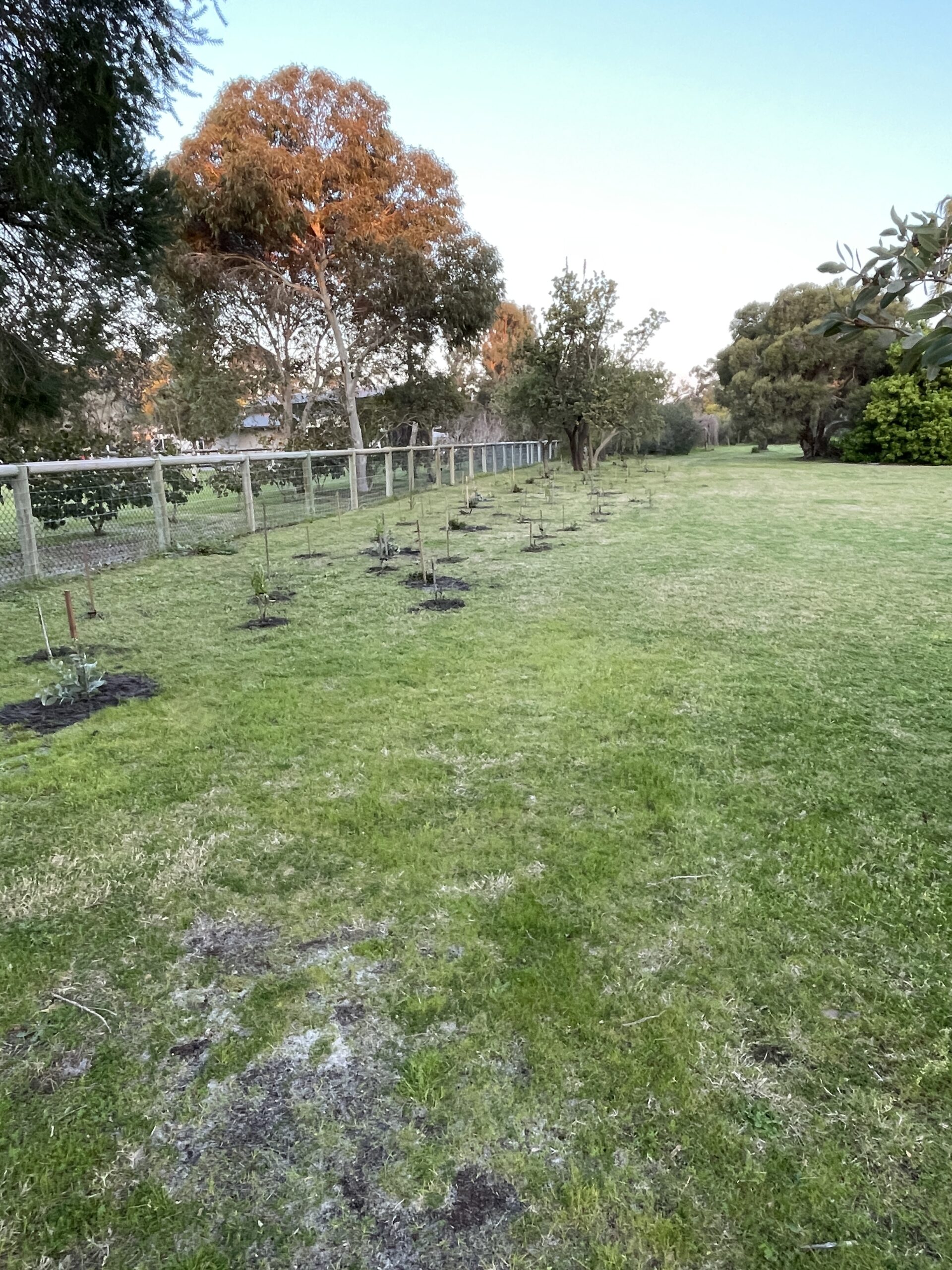
the ‘oval’ is looking great, and we are hoping for a similar though bushier effect on the fence line
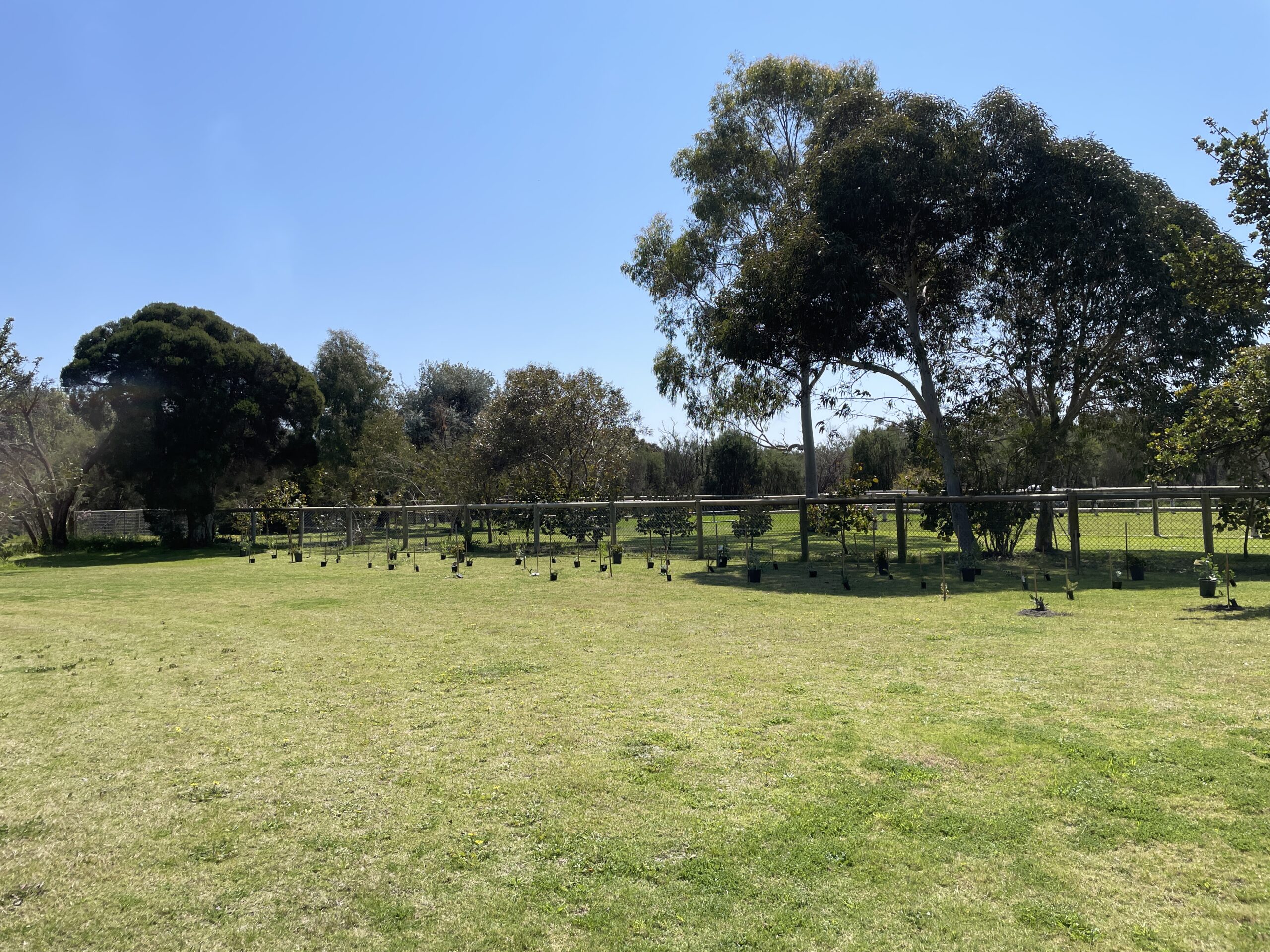
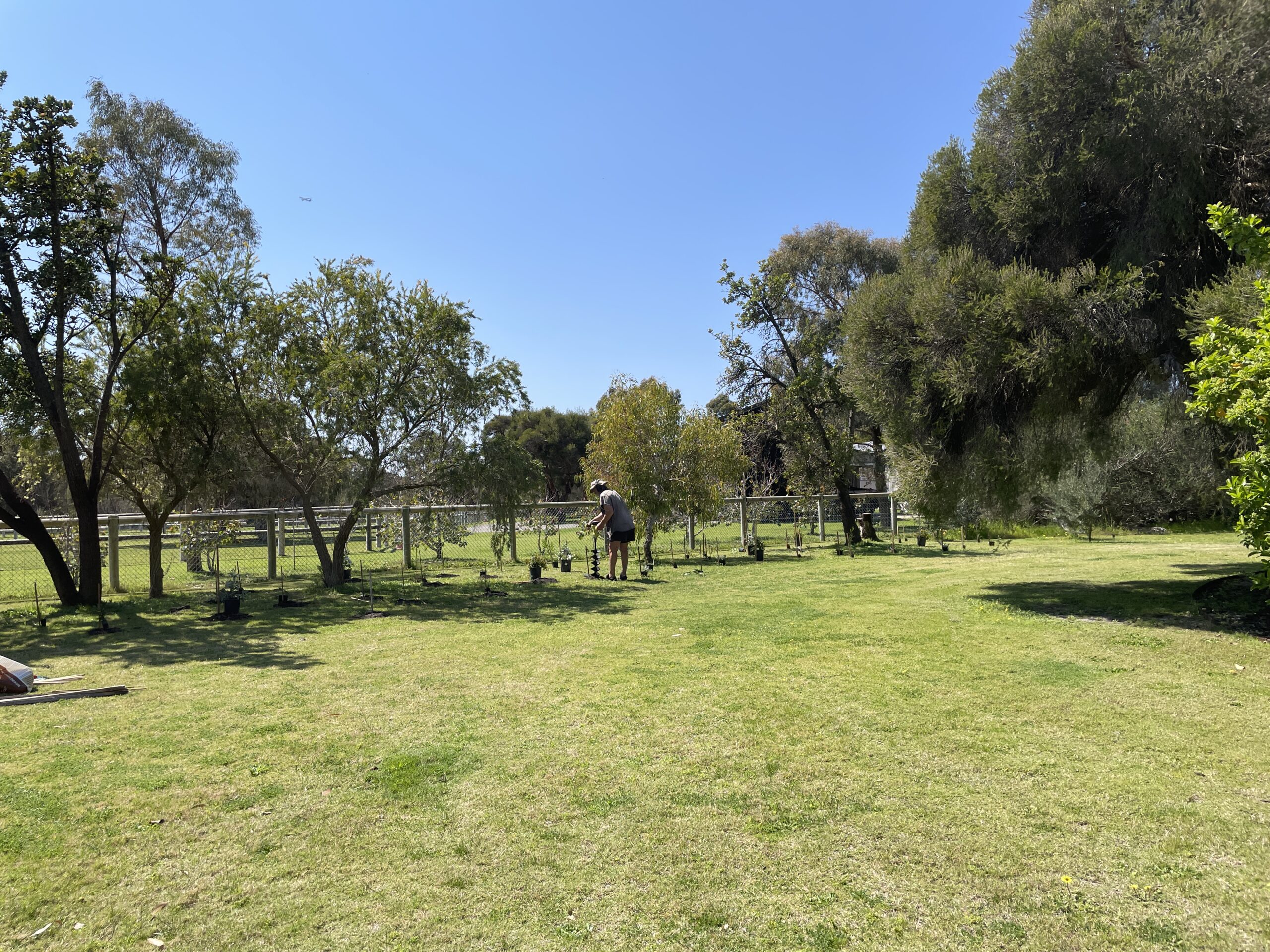
So the latest area to plant is along 60 metres of the neighbour’s fence line. This will give us (and them) greater privacy, and in the process reduces another whole section of lawn! We need to keep a considerable amount as part of our bushfire protection zone, but look forward to this new section of 125 native plants taking off.
pots all placed ready for the holesthank goodness for the Ryobi post hole digger!all 125 plants are in, ready to take over the lawn
The plants we chose are deliberately bushy, screen type plants that should eventually completely hide the fence line. As they grow, we will gradually work on killing off the lawn around them, but decided to leave it for now……. hopefully that works!
Well, this winter has been very wet with both rainwater tanks overflowing- that’s 210,000 litres worth of rainwater storage! We are really pleased, as this sets us up well for summer, and this is our only source of water for the house (we have a bore for the grounds). The downside of all that rain is that the gardens are waterlogged! The amount of water, along with some extended frost (we got down to minus 3, followed by a few days of minus 1/minus 2) means several of our fruit trees and garden plants have really suffered.
We lost a heap of passionfruit, with the unripe fruit dropping off from the cold, and it looks like the vines are lost too! In addition to that, the quail pens have had a regular drenching. So, as in ‘there is never nothing to do’, we have rethought that area. We plan to move the quail pens so we can roof over the top, and have planted out a new passionfruit area alongside the tank. We are hoping the tank will help reduce the risk of frost, plus bought more frost resistant plants (Panama red and Panama yellow).
Fingers crossed these passionfruit benefit from the warmth of the tank on those frosty mornings!
Despite netting both mangoes and the sapodilla to help protect them from the frost, as they were very seriously set back a couple of winters ago, the leaves have not survived the extended frost we had this year. Fingers crossed they bounce back- we did enjoy some hope grown mango last year so we are keen to nurse them along!
The guava has also really suffered! It has never done quite as well at McCarthyPark 2 as it did in the old place, which is such a shame… but again we are hopeful!
Like in ‘setbacks’, at times it feels like one step forward and two steps back… and if the trees don’t bounce back in spring/summer we need to seriously consider ripping them out and replacing them with more frost hardy trees. We would be reluctant to do so though, given we brought them to McCarthyPark 2 as already mature trees…fingers crossed!
When we moved in to McCarthy Park 2, we had to add some fencing to ensure there were places the wildlife could be and the dogs could not…and it paid off! We get heaps of birds and quenda visit all around the property, but also get kangaroos in the back part of the property which we kept as natural bush.
This big fella was looking at us through the fence by the beehives!