Bee swarm!

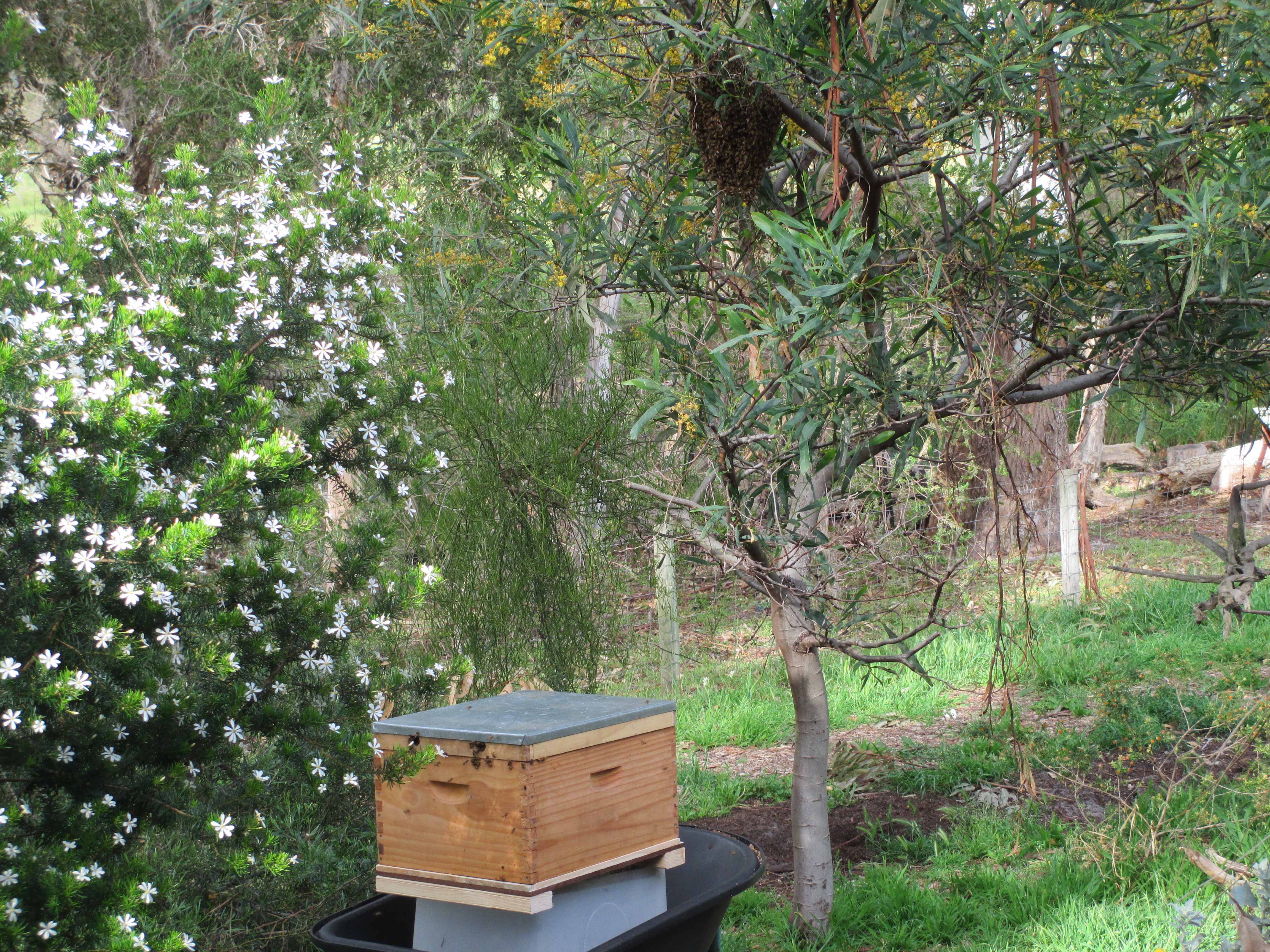
Here in Perth, we have had an incredibly slow, cold, wet start to spring…….. but yesterday was a beautiful spring day, and the day one of our hives swarmed. The weather had been so awful, we hadn’t managed to check the hives for a couple of weeks, and we still don’t know which of our three hives may have swarmed (all look full and active).

Swarm in a tree

Swarm in a tree

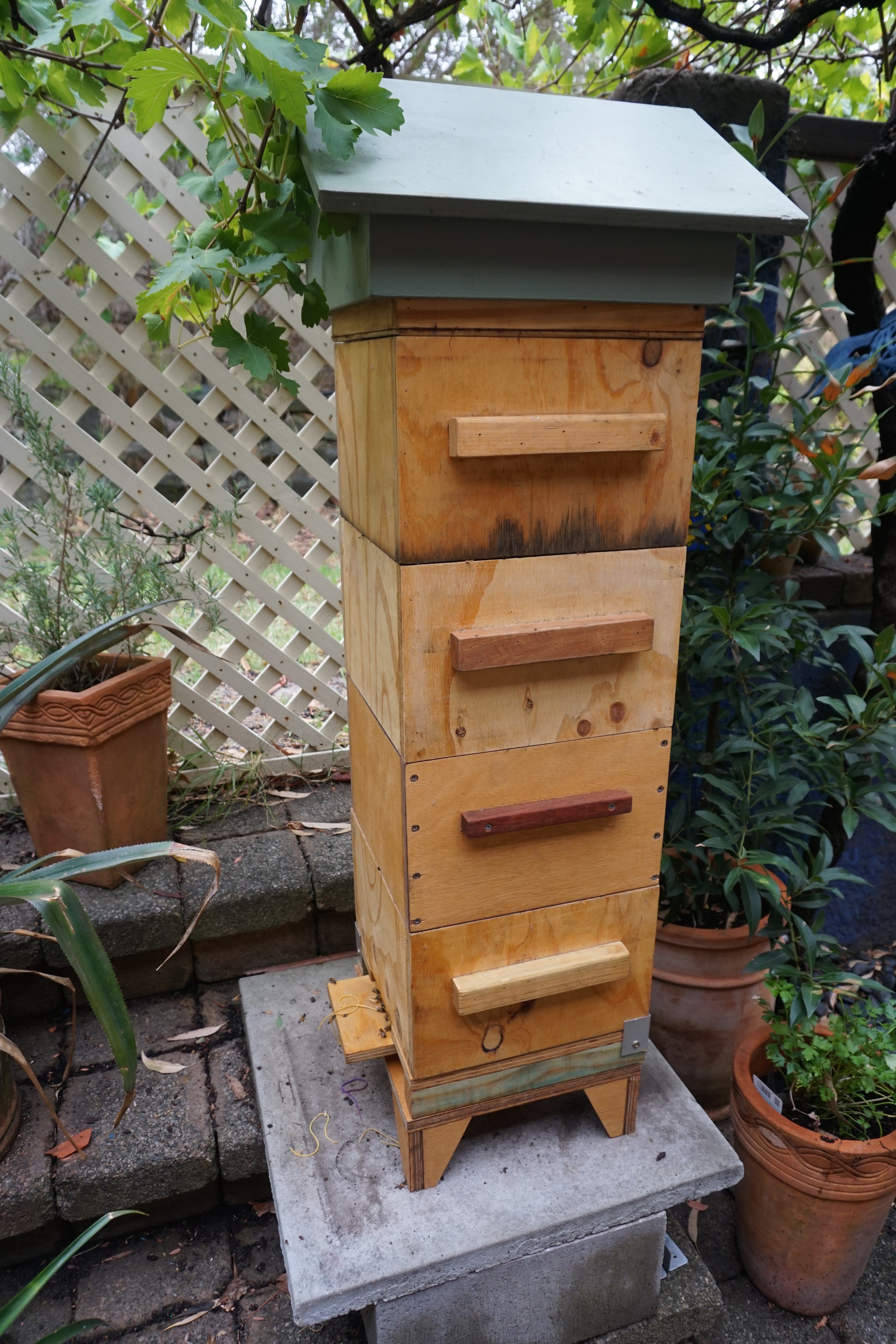
After some discussion, we decided we would keep it, but locate it down near the orchard and ‘dam’ rather than near the house like the others. We had a spare super, lid and plenty of frames so we just bought a bottom board and we were ready to go!

We placed a white sheet under the swarm, climbed the ladder and trimmed the branches around it. It was good to have the white sheet down as quite a few bees dropped in the process. There were two main ‘clumps’ of bees which we carefully placed in the hive box, with four centre frames removed. When we felt we had as many as we could, we did a quick shake and placed the lid on, then wrapped up the bees on the white sheet, and took the hive (in a wheelbarrow) to the area we had chosen.

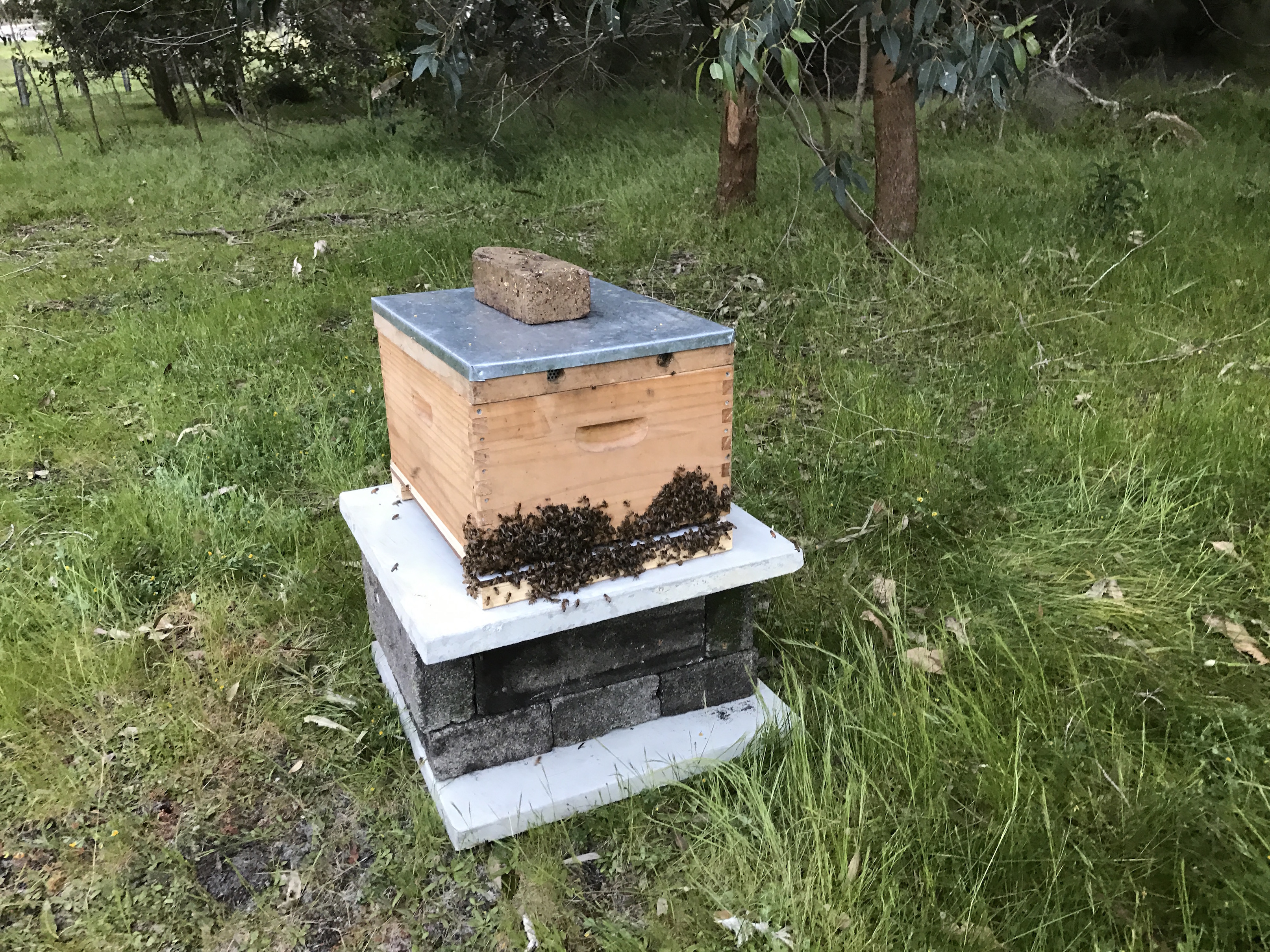
It all worked well, fingers crossed the bees like their new home and stay there!

so far so good....

so far so good….

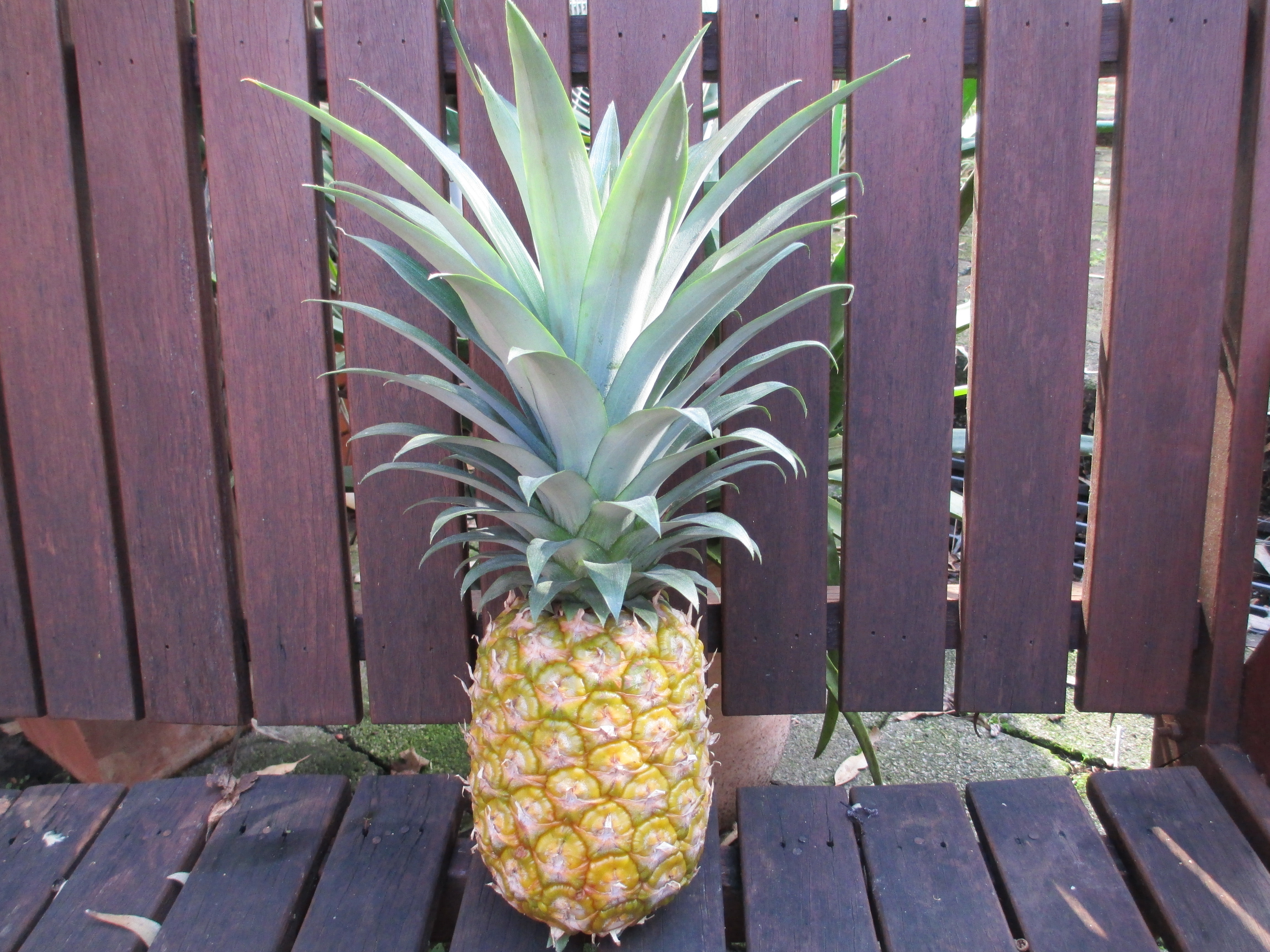
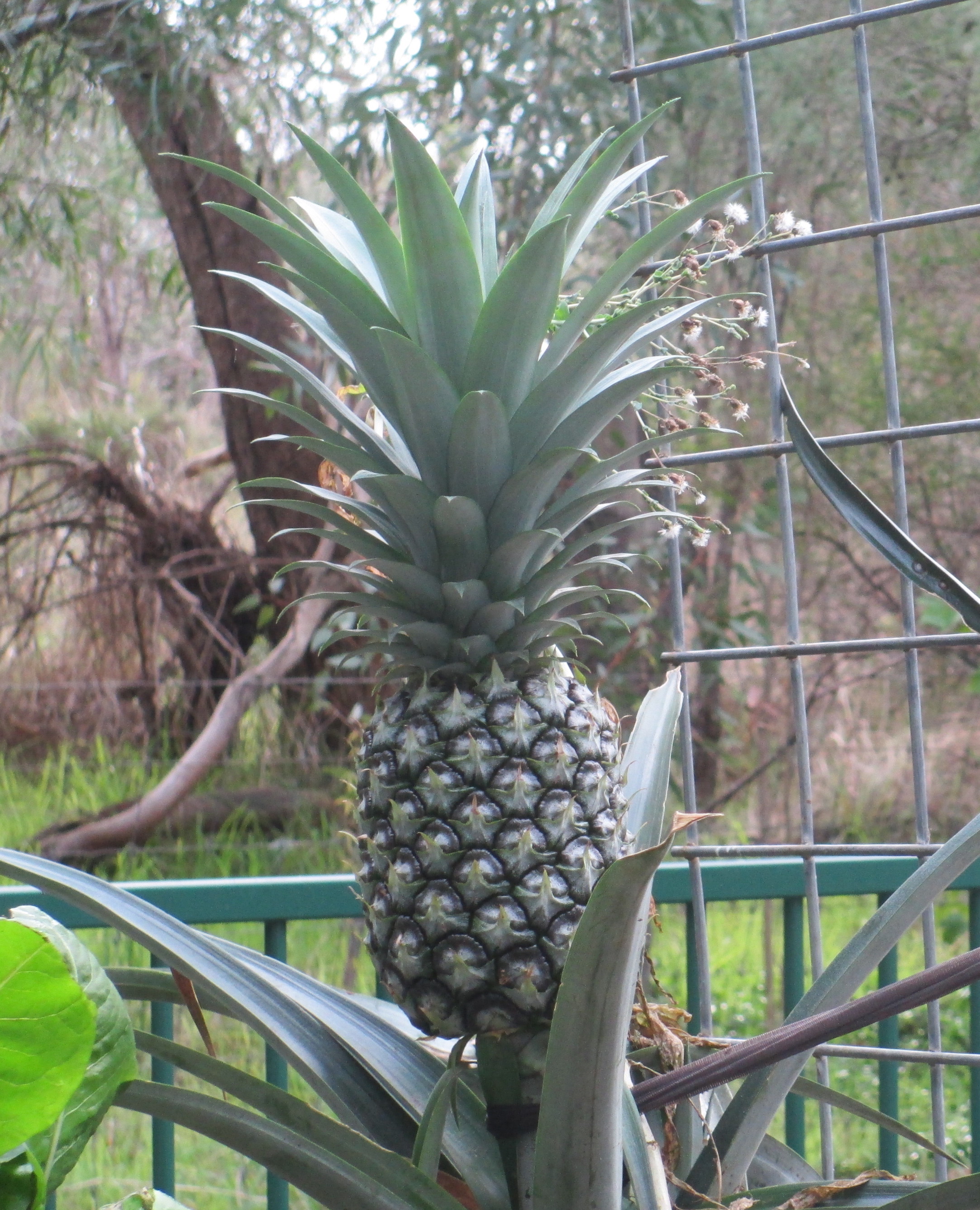
The most delicious pineapple!

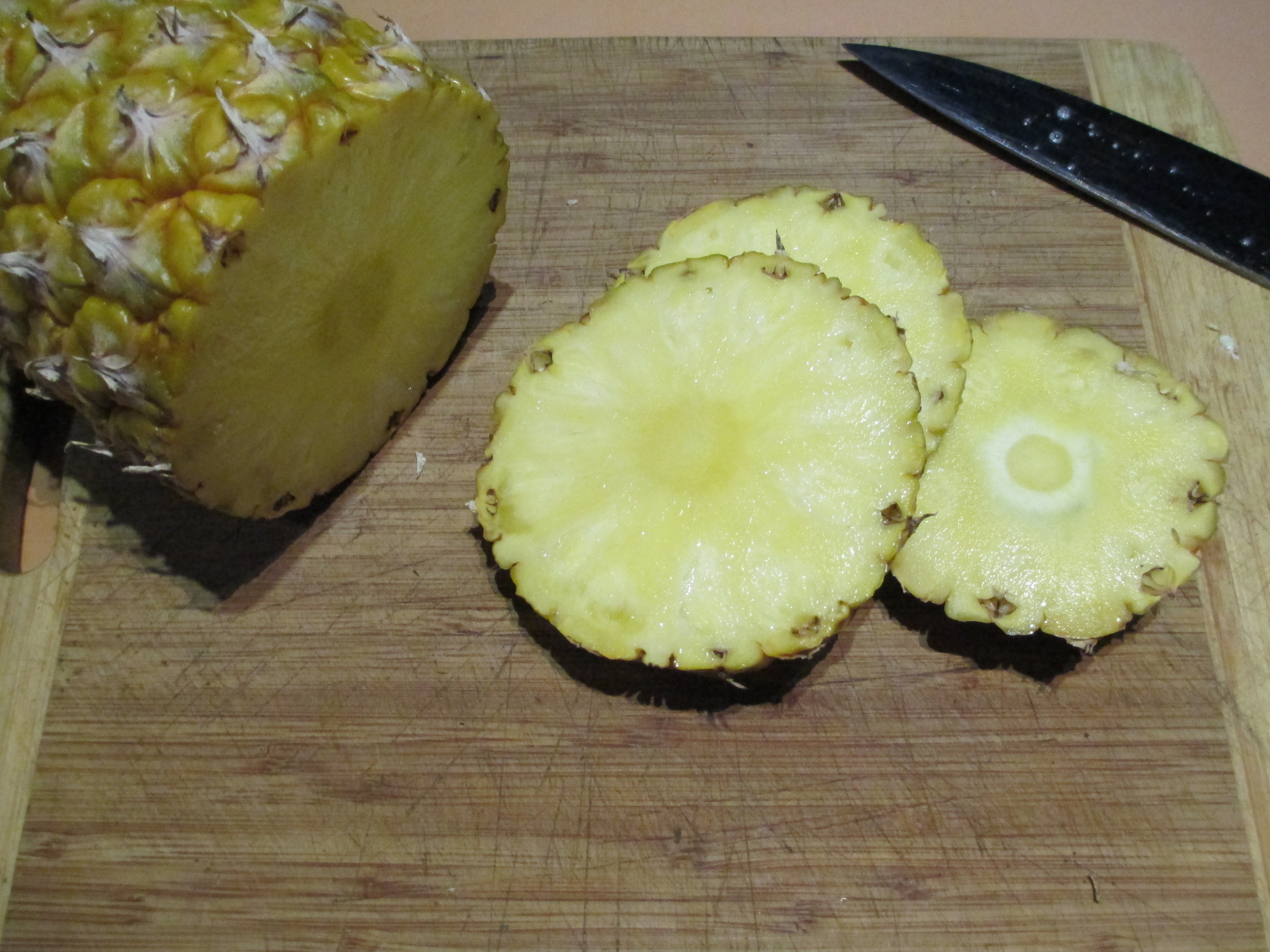
The waiting was worth it- the pineapple growing in the aquaponics system was finally ready- at the end of July in a Perth winter! Who would believe it? But, all who have tasted it agree it is the most delicious pineapple!

Magnificent pineapple!

Magnificent pineapple!

Juicy and sweet!

Juicy and sweet!

The other pineapple growing in a pot (see the May post), should be ready in a couple of months or so, it will be interesting to see if there is a difference in the taste (aquaponics vs dirt). When this one is finished, the top will be prepared and planted ready to grow another pineapple!

Bee update-moving a hive

Having recently changed the kitchen hive to a Warre we have been keeping a close eye on it especially getting into our winter. A check last week revealed condensation inside the hive, and a little bit of mould and mildew. A quick google search revealed that a little bit of mould or mildew is not a huge problem as the bees will clean it up, if they are all fit and healthy. The problem though, is the condensation which causes it in the first place.
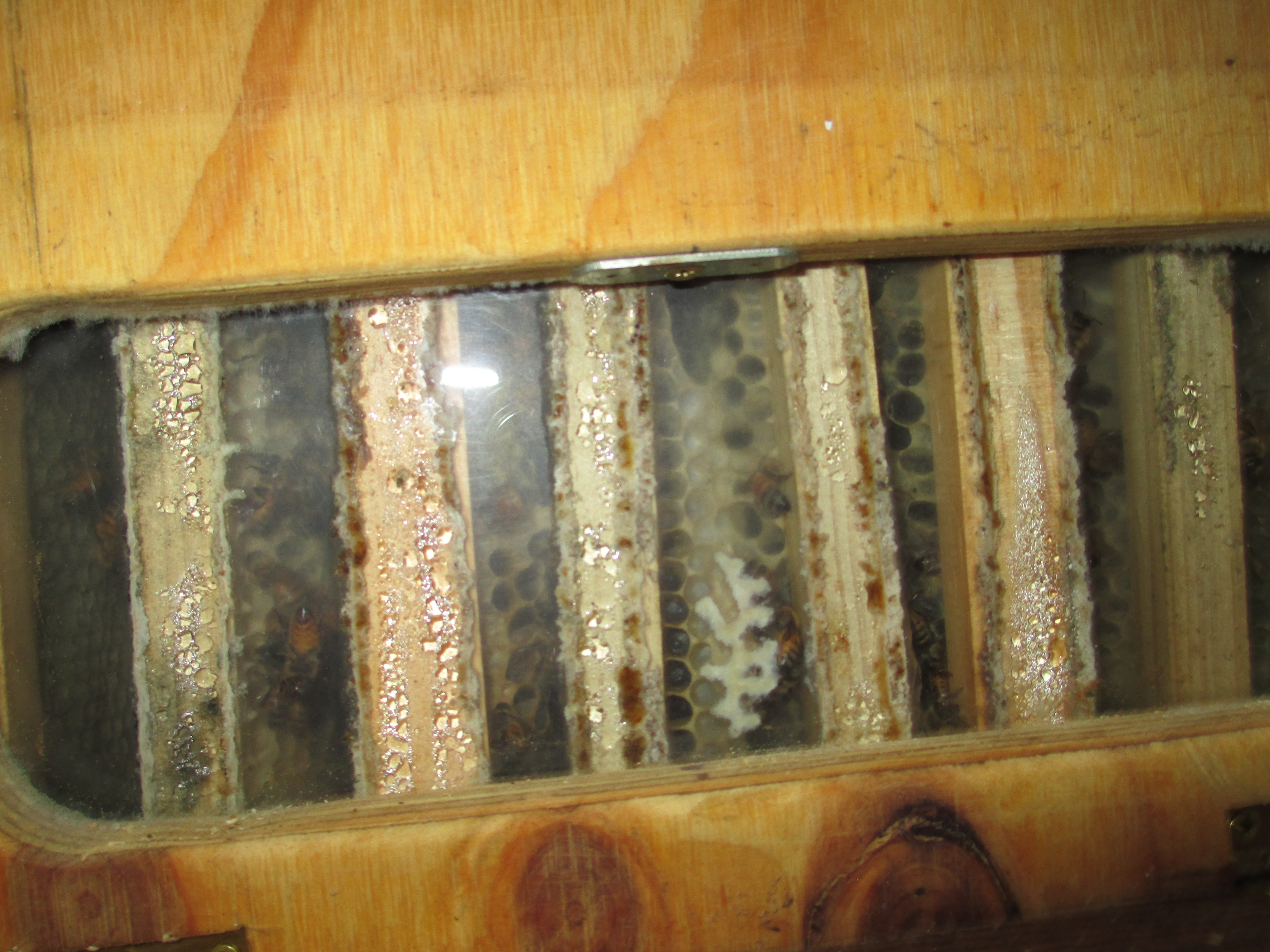
condensation inside the hive

condensation inside the hive

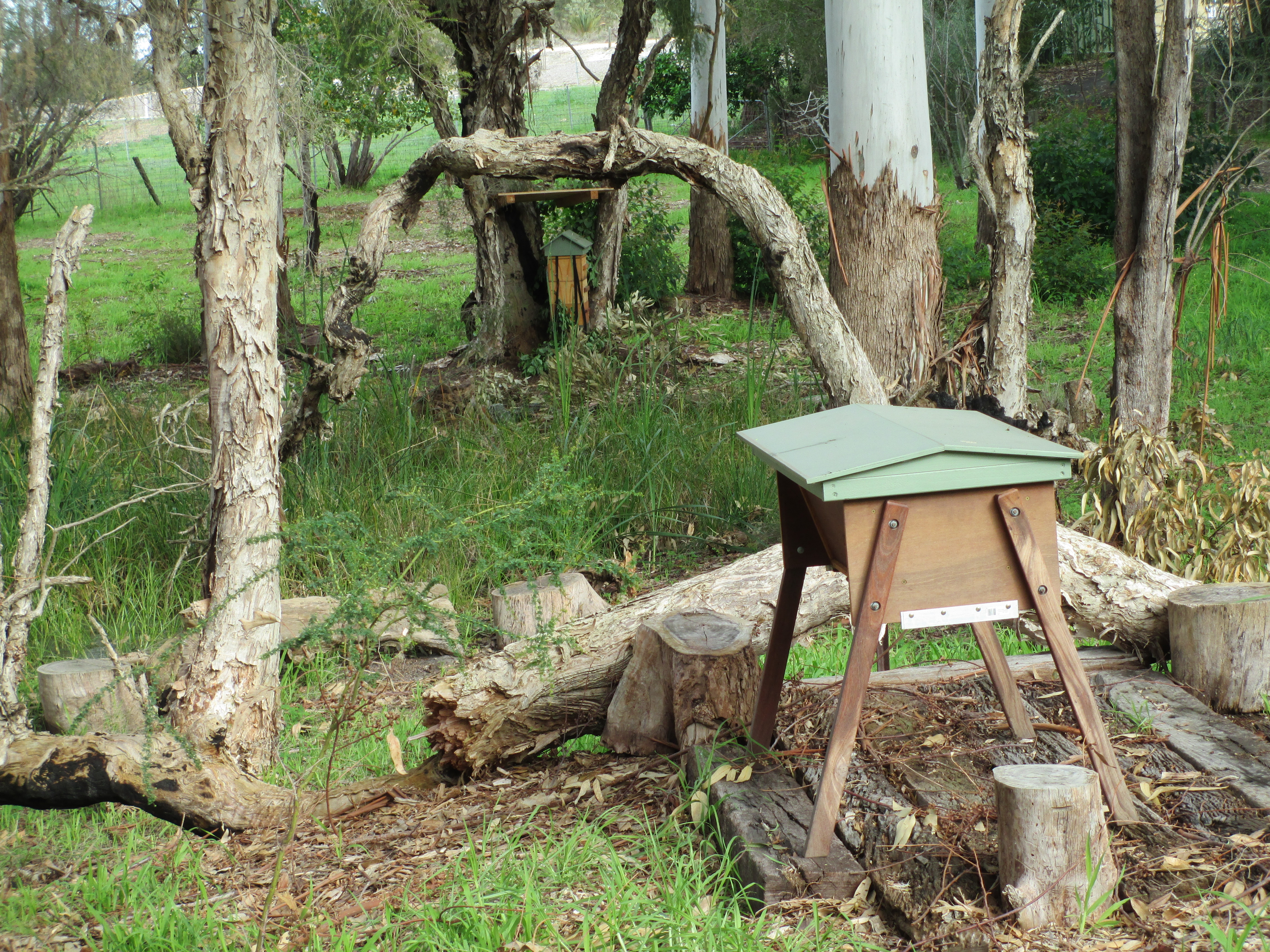
We realised that where the hive is it doesn’t get a lot of sun or air circulation. The Langstroth seemed to cope ok, but perhaps the different set up of the Warre makes it more susceptible. Anyway, this discovery led us to look for a different location and a way of moving the hive. There is a lot of information now on moving a hive, without the need to stick to the old ‘less than a metre or more than 3 kilometres’ rule, so we chose a spot about 100metres away, not far from the Topbar hive where the Warre can face ENE and get a good amount of winter sun to help dry it out, we hope!

After dark, the hive entrance was covered with mesh to allow for ventilation but no bees, and the hive was strapped to keep all the boxes in place. Next morning we loaded the hive onto a trolley and moved to its new, prepared location.
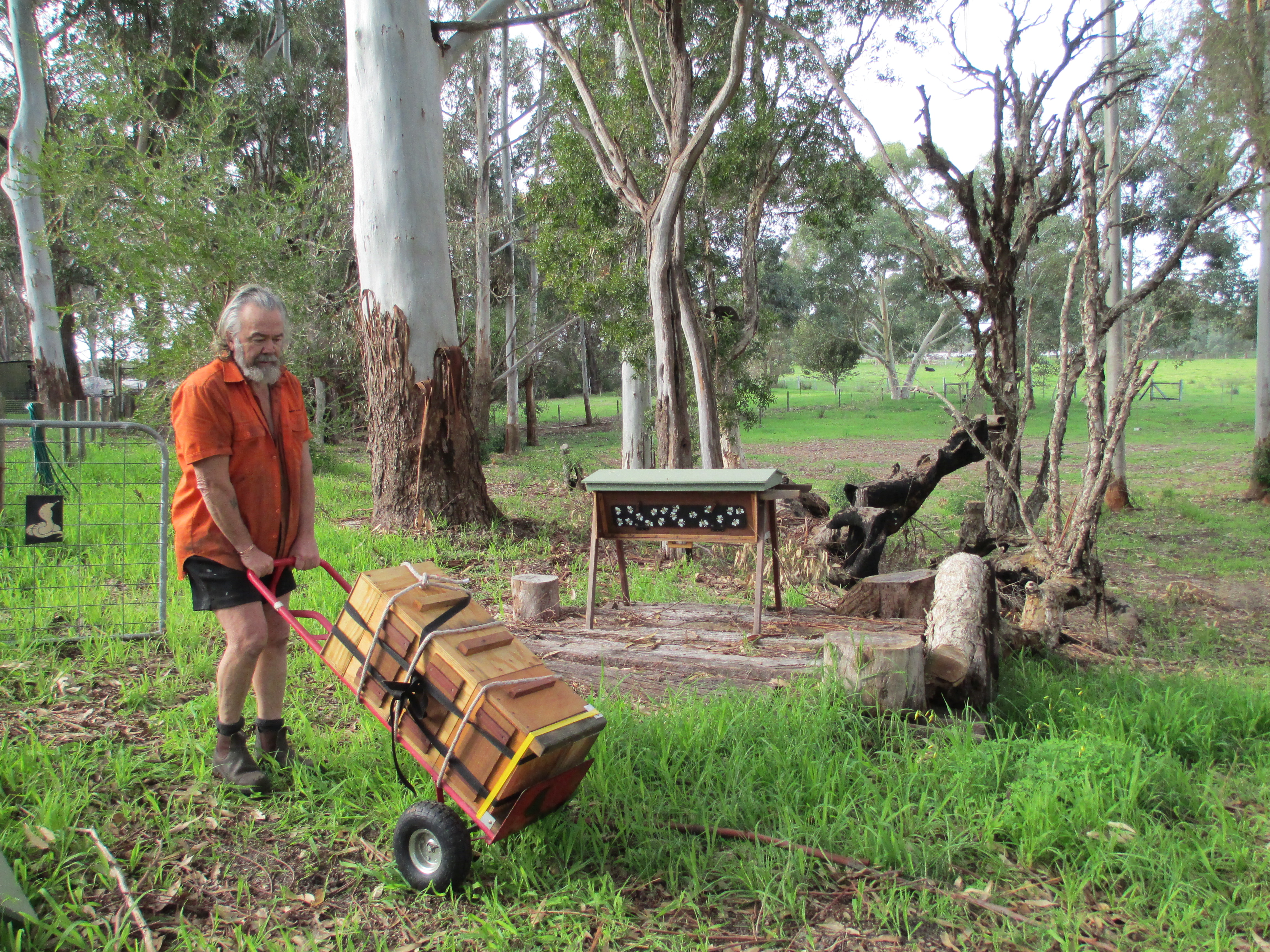
Moving the strapped up Warre to its new location

Moving the strapped up Warre to its new location

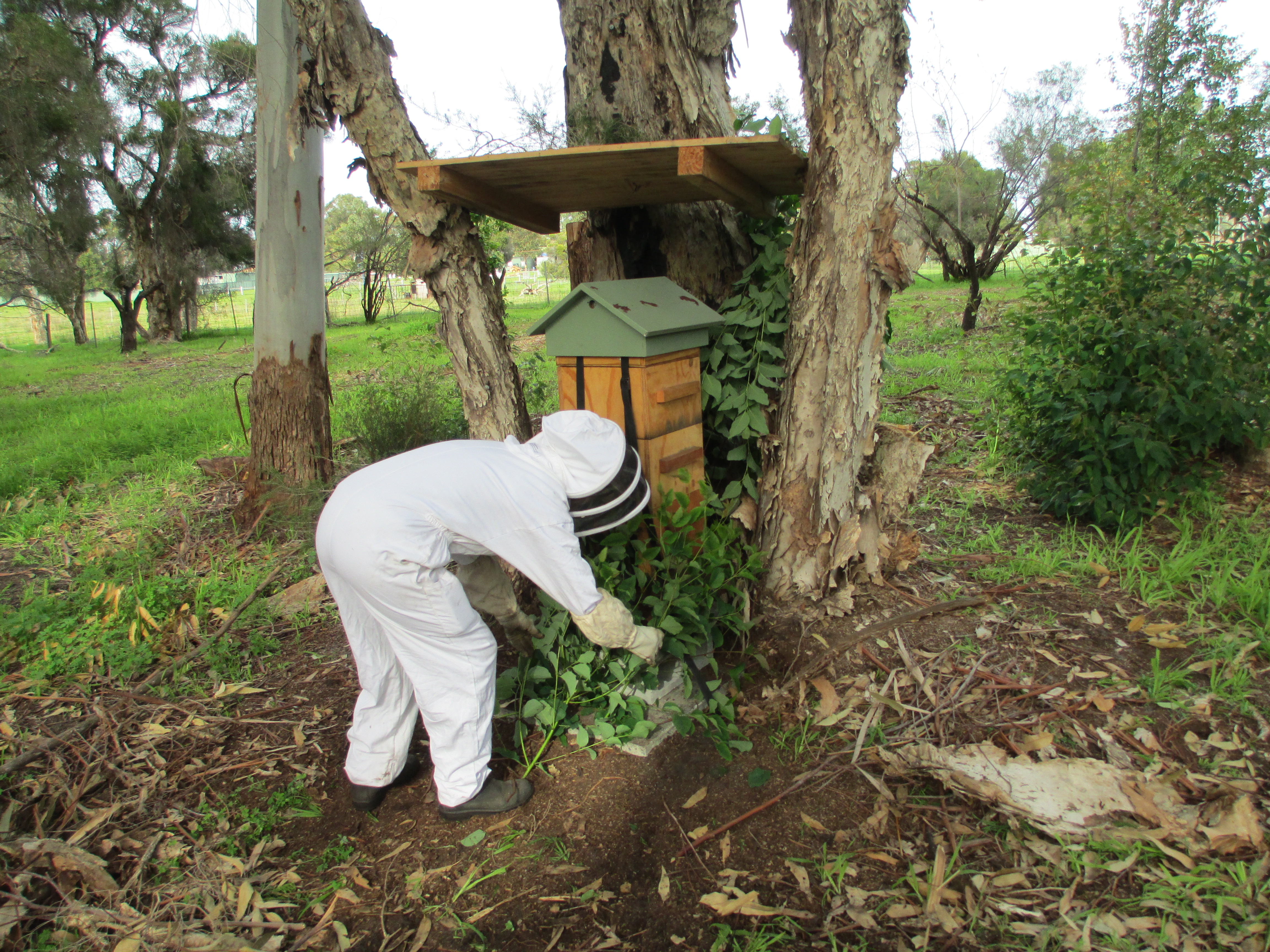
Once in position, we put some leaves near the entrance, as this obstacle apparently makes the bees more likely to reorient and slow down their exit (they are less likely to be on ‘auto pilot’ and return to the old location by mistake).
IMG_0802

Also to help their reorientation we kept them in for 3 days- apparently they can ‘forget’ their previous orientation.
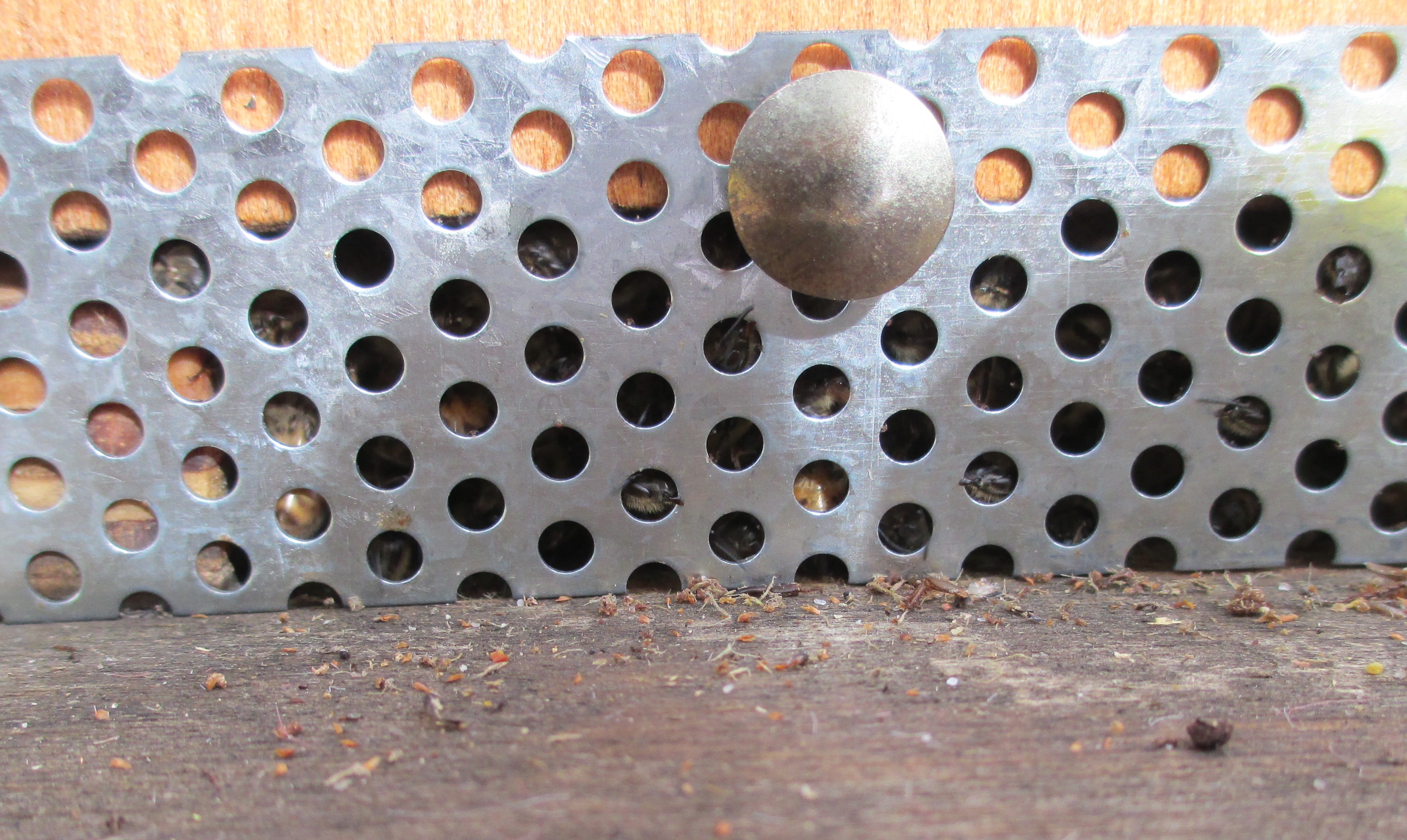
Thousands of bees wanting to get out!
Thousands of bees wanting to get out!

Settled in its new location, near water and the topbar, but still closed up.

Settled in its new location, near water and the topbar, but still closed up.

After three days, we opened up the entrance, made sure the leaves were in front as an obstacle, and watched the bees pour out! Sure enough, they crawled out and circled above the entrance (a sign they are reorienting).
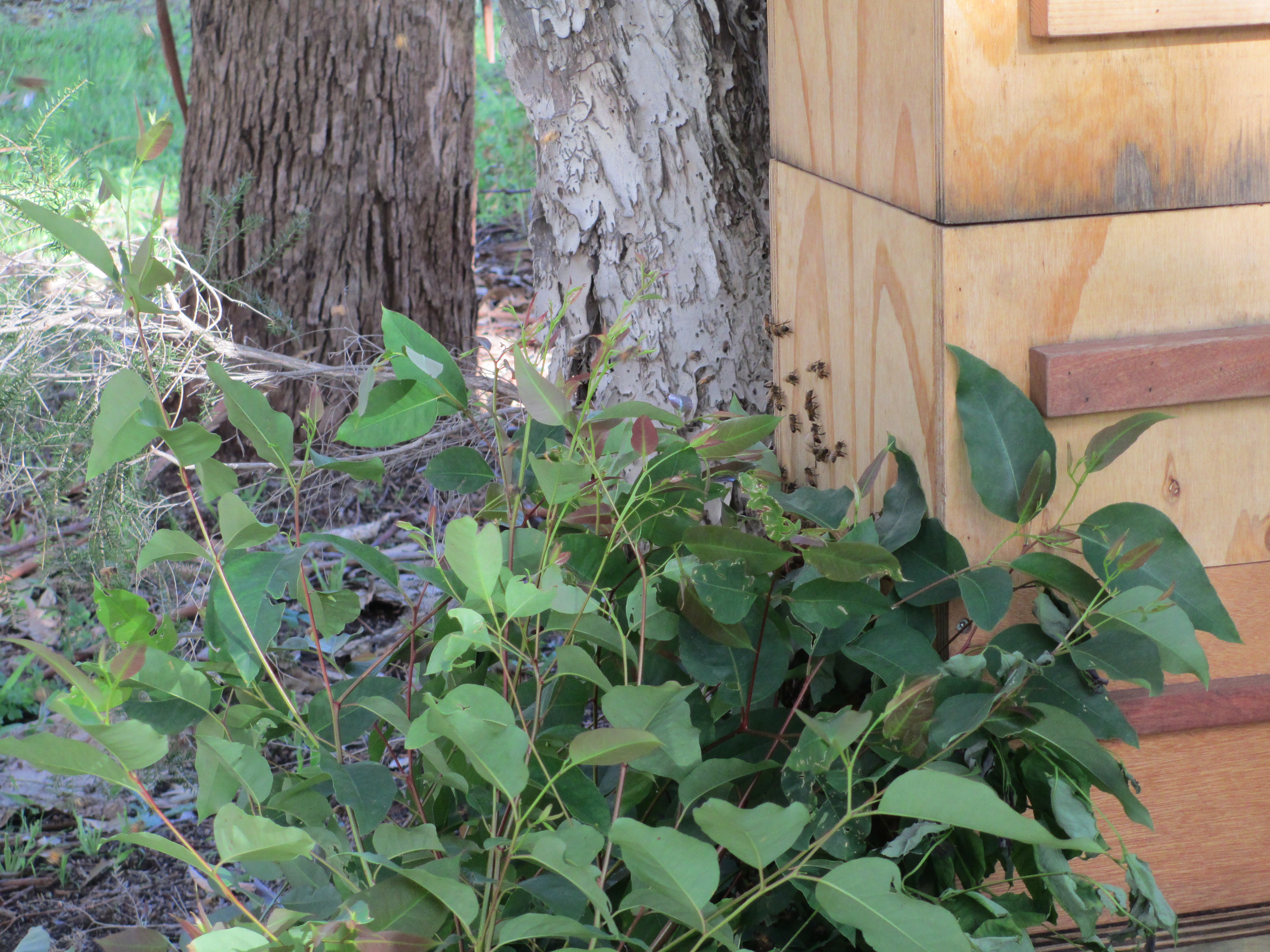
Bees first exit in their new location

Bees first exit in their new location

Unfortunately there were a lot of dead bees too, but we hoped that ultimately the hive was better off for the move. Soon we saw lots of bees circling the old location near the kitchen window, looking for the hive, but within an hour or so they had gone, we hoped back to their new home.

Subsequent days there were more bees flying in the old location, but again only for a short time, hopefully they returned safely. The Warre is getting some lovely winter sun and hopefully drying out. In another day or so we will check it out and see how it is going. If necessary due to a loss of bees we can take the top box off and reduce the size. Fingers crossed!!
Birdlife

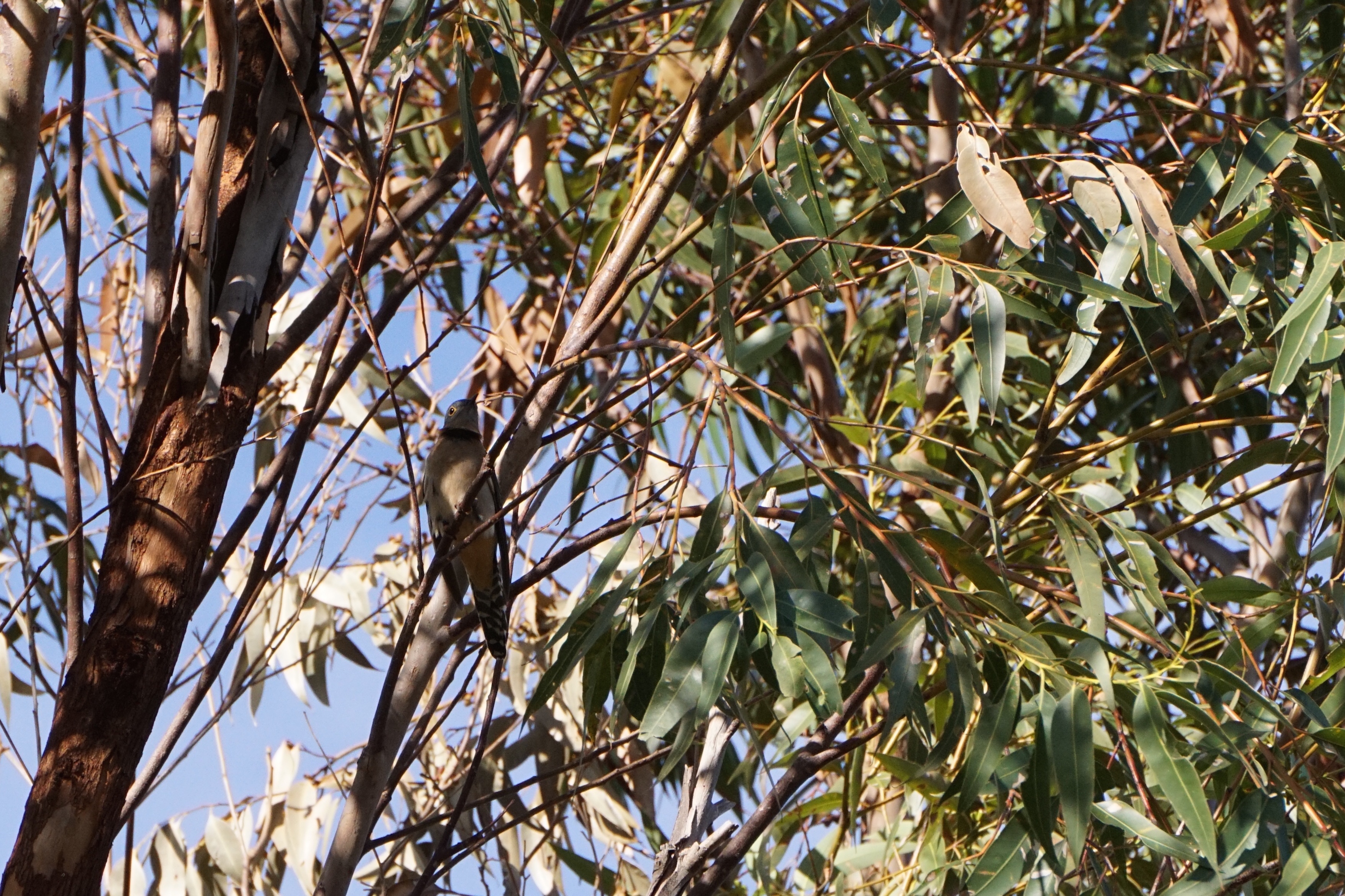
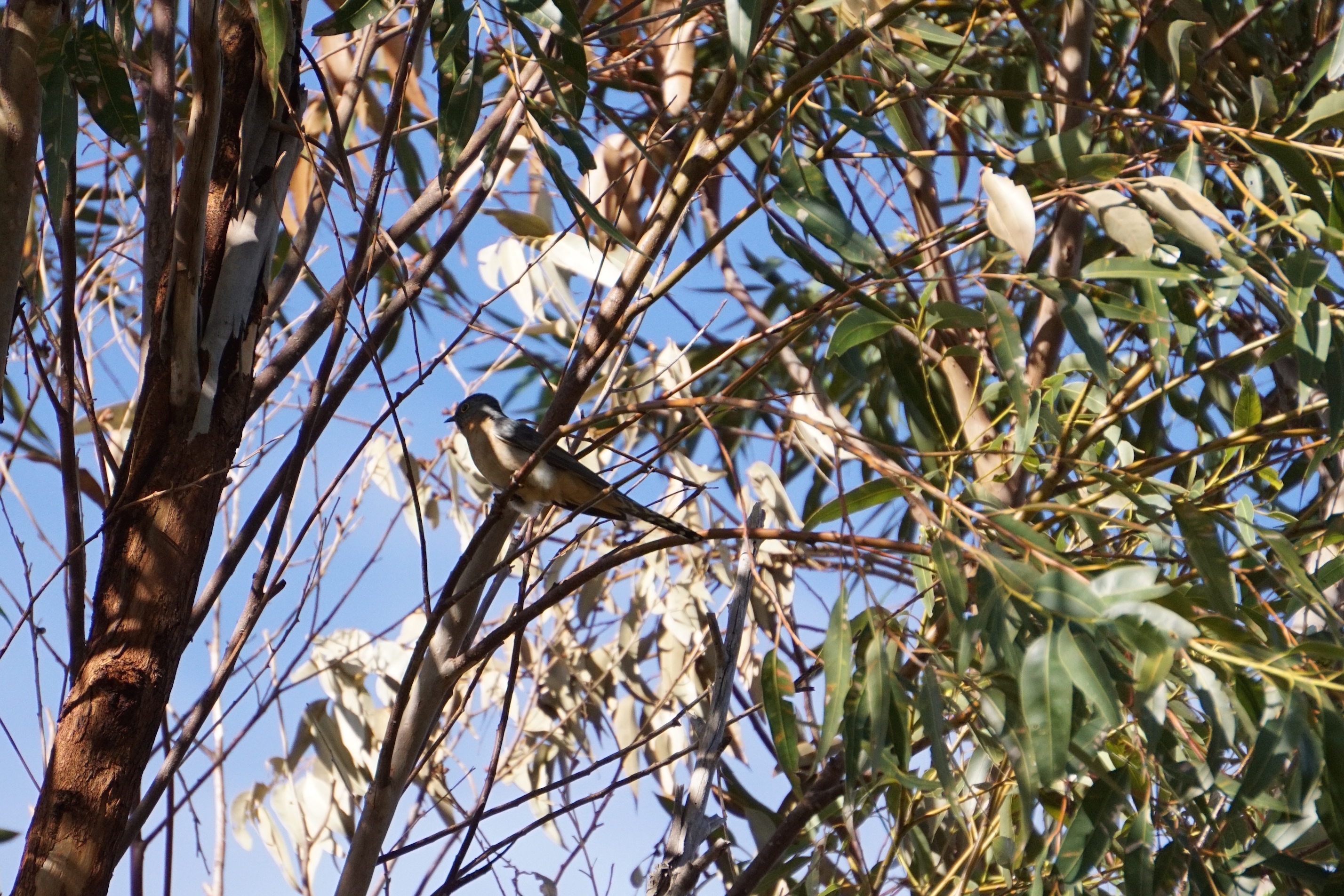
It is wonderful to see a variety of native birds on our property- and always exciting to see something new, especially when it is a bird we have heard many times but just could not see it! The Fan-tailed Cuckoo is one of those! It has a very distinctive call, so was easily identifiable….. but it always went quiet when we started to get close enough to see it! Well, finally we saw one- and managed a photo!

Fan-tailed cuckoo

Fan-tailed cuckoo

DSC05455

Pineapples!

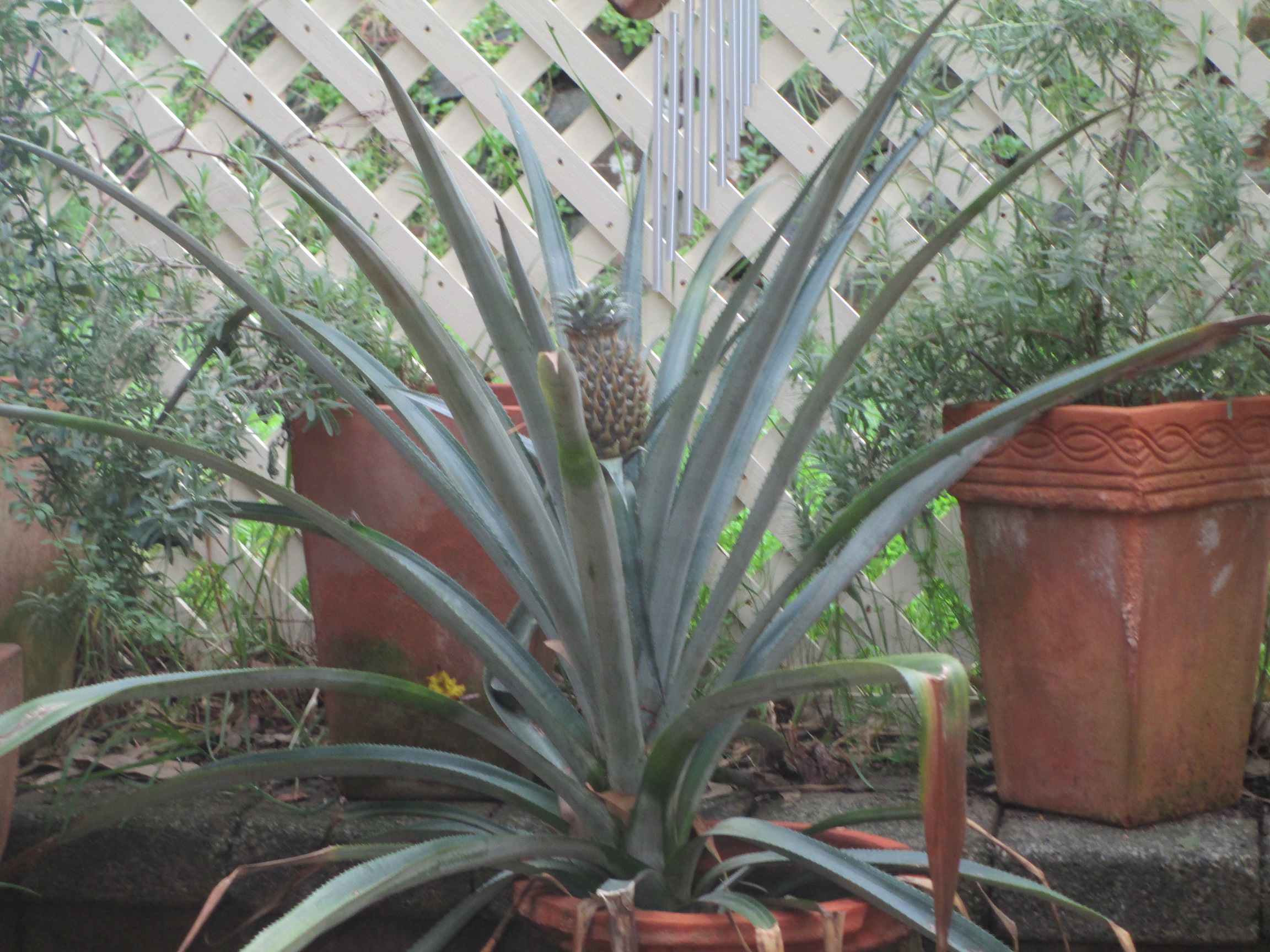
We have been growing pineapples from the tops of bought pineapples, and finally have some fruit this year! The plants in the aquaponics system have grown much quicker than those in the garden, interestingly. This beauty is almost ready….

Aquaponics pineapple

Aquaponics pineapple

This is the one growing in a pot near the back of the house, not as big but growing!

Pineapple growing in a pot

Pineapple growing in a pot

Can’t wait for them to ripen!!

Amazing bees!

A while ago we posted about changing the kitchen Langstroth hive over to a Warre, well we have now finished the conversion. It took a little while because the brood were in Langstroth super, and we wanted to wait a while until the queen had moved down into a Warre super below…. well, she finally did and we felt we could remove the now superfluous Langstroth super.

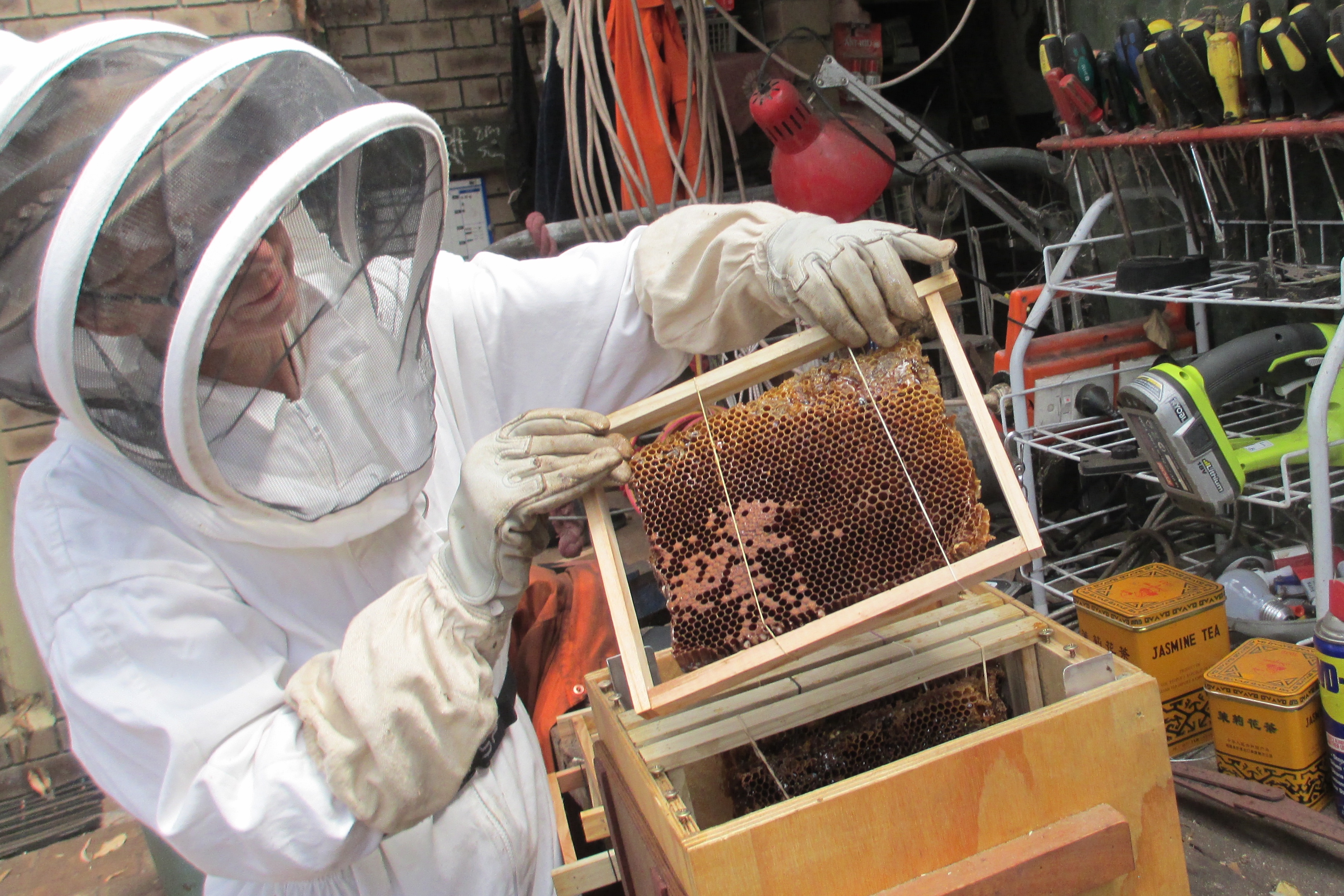
Because there was still some brood in the Langstroth however, we decided to cut it off the frames and attach it to some of the Warre frames- we really didn’t want to destroy what brood remained in there.

So, with knife in hand, we cut out just the right size and using elastic bands placed the brood comb into the Warre frames.

Brood from a Langstroth frame held in place in a Warre frame with elastic bands

Brood from a Langstroth frame held in place in a Warre frame with elastic bands

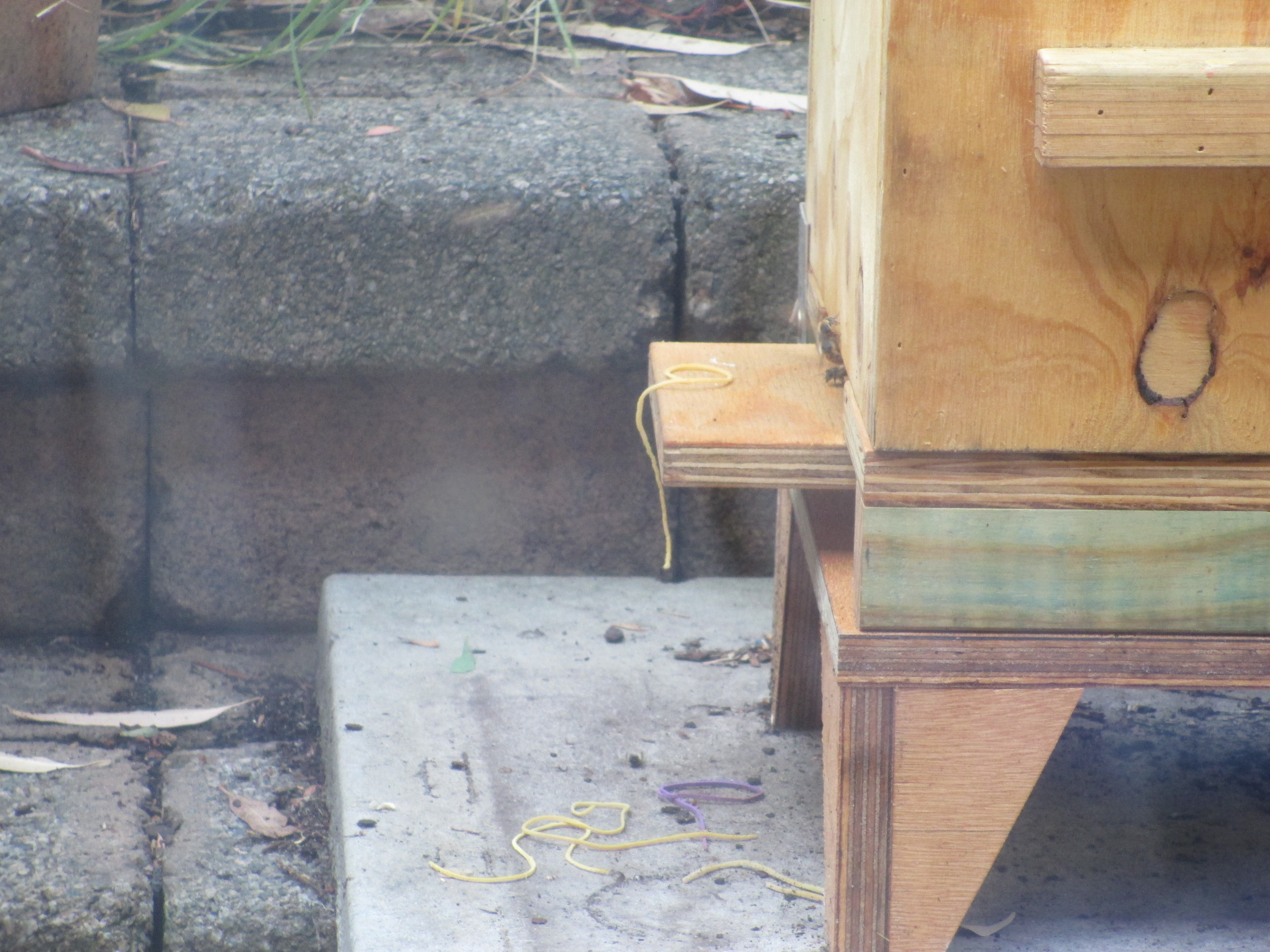
The final steps in the conversion went smoothly, and it wasn’t long before the bees got to work and secured the comb, removing the elastic bands from the hive!

Bees removing elastic bands

Bees removing elastic bands

The Warre hive is now complete and looking healthy.

Warre hive

Warre hive

Trees!

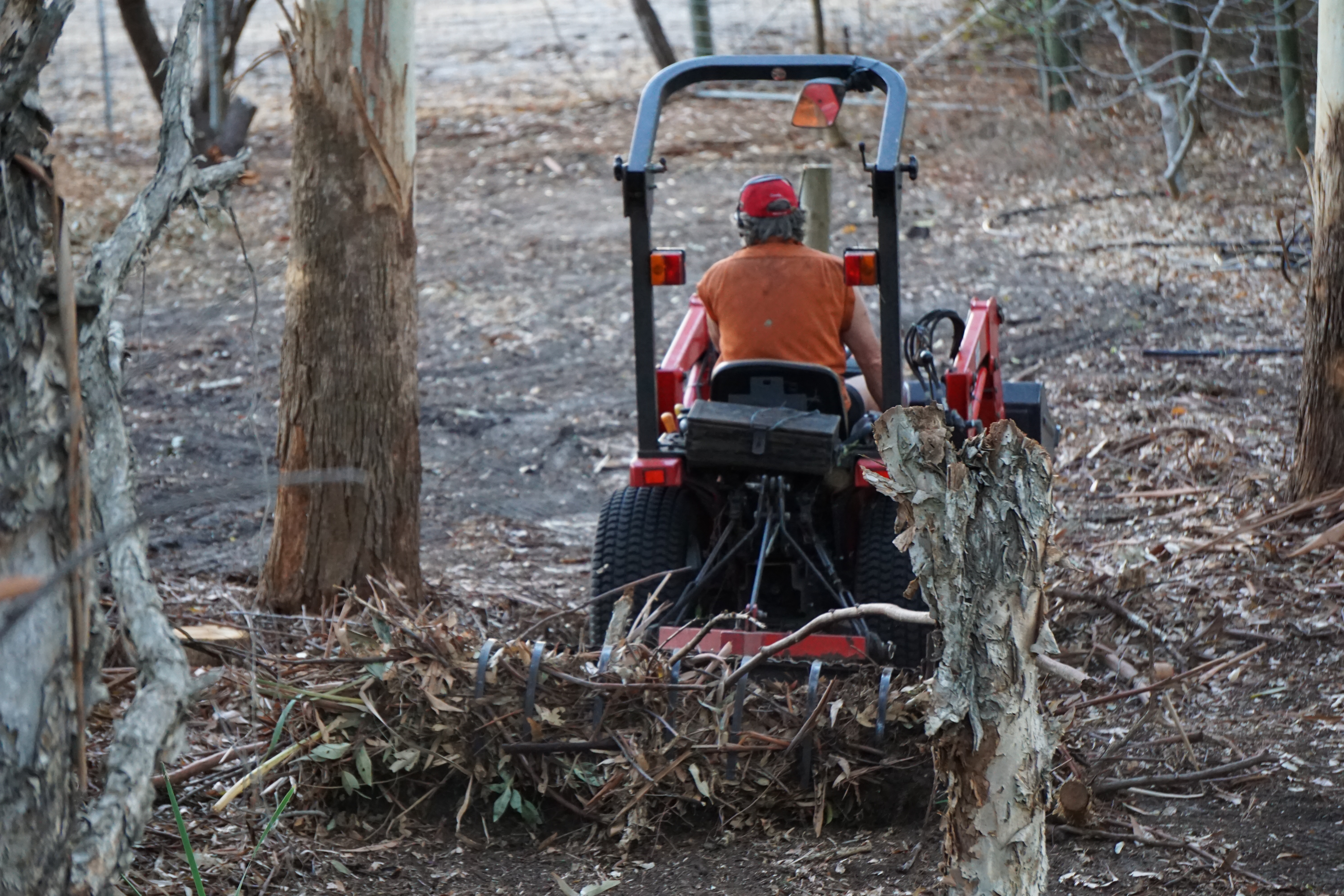
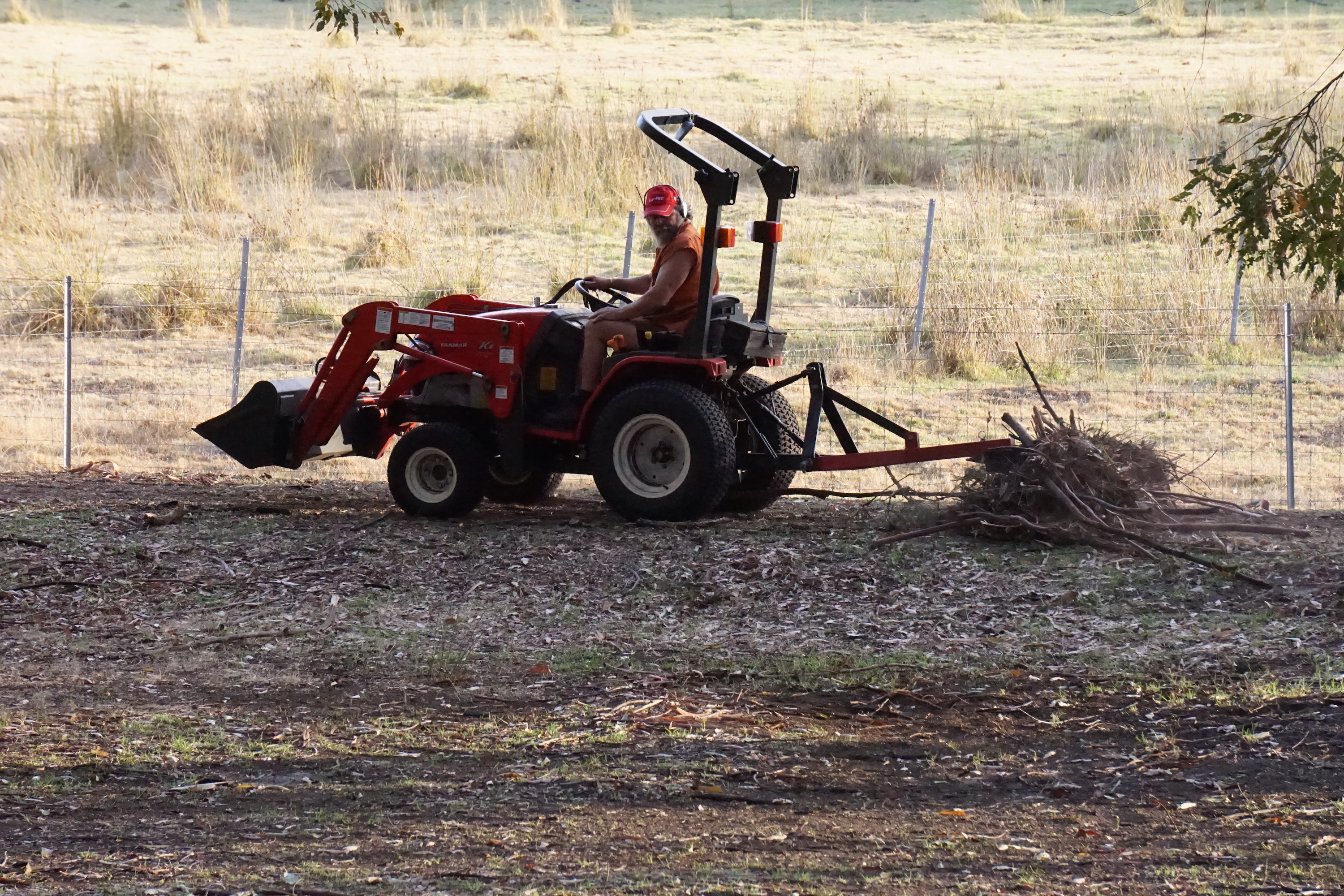
As mentioned before, we have been particularly busy working on reducing the fire hazards around the house. This has involved endless raking up, fortunately mostly using the big rake on the back of the tractor, plus professional tree loppers. We hired Branching Out, and they did a great job thinning out the trees too tall for us around the ‘snake lake’ mulching and clearing as they went.

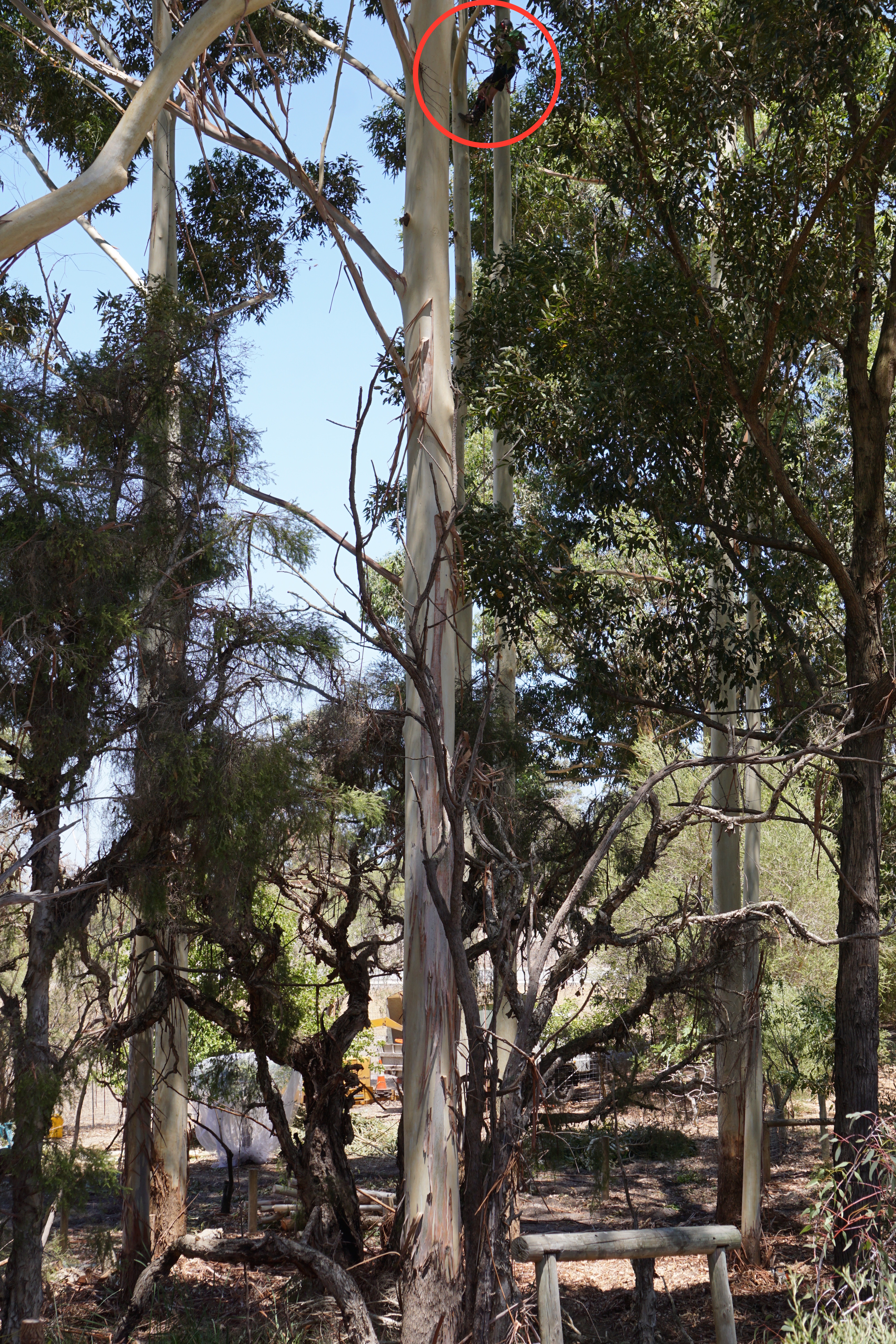
When we say tall trees, they really were very tall! The aim was to stop a fire in the leaf litter below getting up into the tree canopy and putting the house at risk.

This height really needs a professional!

This height really needs a professional!

Raking the leaves and twigs

Raking the leaves and twigs

Taking the leaves away from the house

Taking the leaves away from the house

Drop skinks!

It has been pretty busy here at McCarthy Park lately. We have had one bush fire already and have spent a fair bit of time doing more fire proofing, including getting some tree loppers in to help clear.

An entertaining aspect of the wildlife at present is the King skinks. We have always had a whole community of them in the rockery, and encourage them by giving some food now and then and keeping the dogs out of that area. We often have them in the roof space, and occasionally get quite energetic and run around.

this year, they have added a few kamikaze dives from either the eaves or the grape vines! Quite regularly we here a THUD and look out to see a skink on the ground!

King Skinks in the rockery

King Skinks in the rockery

DSC01783

Finding its way in!

Finding its way in!


Mead

We have so much honey, and a lot of it crystallised, so we decided to try Sandor Katz T’ej (Ethiopian style honey wine) as described in his book ‘Wild Fermentation’. It is delicious, and so very easy to make! It has helped put the crystallised honey to good use- we just warmed it enough to liquify before mixing with the water.

Naturally fermented mead (T'ej)

Naturally fermented mead (T’ej)